

The cost of inpatient rehab is not one fixed number, and that’s what makes this decision so stressful. Depending on the type of rehab, your insurance, and how long you stay, you might pay a deductible and coinsurance, or you might face a bill in the tens of thousands. The good news is that once you understand how pricing works, the numbers get a lot less mysterious.
What “inpatient rehab” means, and why the price range is so wide
“Inpatient rehab” can mean two very different things, and people mix them up all the time.
The first meaning is inpatient or residential addiction treatment, where you live at a treatment center for substance use care. That usually includes a structured daily schedule, therapy, medical oversight, meals, and a place to stay. This is what most families mean when they’re comparing addiction rehab programs.
The second meaning is medical inpatient rehabilitation after a stroke, surgery, injury, or serious illness. That care happens in an inpatient rehabilitation facility, often inside or tied to a hospital, and it follows a completely different payment system, especially for Medicare patients.
That distinction matters because the prices are built differently. Addiction treatment programs often quote a program price or daily rate, then apply insurance if the center works with your plan. Medical inpatient rehabilitation is billed more like hospital care, with Medicare or private insurance rules shaping what you owe.
So when people ask about the cost of inpatient rehab, the honest answer is broad by nature. You may owe a deductible, a percentage of the bill, and extra charges for detox or physician care. Or, if you’re paying privately at a high-end center, the total can climb quickly.

The short answer on cost of inpatient rehab
If you want the fast version first, here it is.
For addiction treatment in the U.S., a 30-day inpatient rehab stay commonly costs about $5,000 to $20,000. A 60- to 90-day stay often runs about $12,000 to $60,000. Private luxury programs can cost much more, especially when they include premium lodging, destination travel, high staff ratios, or complex psychiatric care.
Your out-of-pocket cost can be far lower if you have a PPO plan and the program is covered. But never assume “covered” means cheap. Coverage depends on network status, deductible, coinsurance, prior authorization, and how the facility bills detox and medical services.
Typical price ranges you’ll see in the U.S.
Published numbers are useful as benchmarks, even though they are not your final bill. Research shows that a 30-day inpatient program may cost anywhere from $5,000 to $20,000, with an average of $12,500. On a daily basis, private-facility inpatient care often runs $500 to $650 per day, averaging about $575.
Longer stays raise the sticker price fast. Data also shows that 60- to 90-day inpatient programs range from $12,000 to $60,000 and average about $36,000. Across settings, the average cost of drug rehabilitation per person is $13,475, but that number blends different levels of care and payer types, so it’s best used as a broad reference point, not a quote.
Here’s the catch: a published “program cost” is usually the center’s gross price before insurance adjustments, allowed amounts, and patient responsibility are applied. It may also leave out detox, medications, labs, or outside physician services.
Why two people can get the same level of care and pay very different amounts
Two patients can stay at the same facility for the same number of days and still owe very different amounts. That sounds unfair, but it’s how insurance billing works.
One person may be in network, already met most of their deductible, and have a modest coinsurance. Another may be out of network, still owe the full deductible, and face balance billing on charges above the insurer’s allowed amount. Same bed, same therapy schedule, very different bill.
Prior authorization also matters more than most people expect. Higher levels of behavioral health care almost always require prior authorization and concurrent review, and failing to obtain or extend those approvals is one of the most common preventable causes of denials. Detox can also be billed separately, and medical services may fall under a different benefit category than residential treatment days.
What’s usually included in the price, and what may cost extra
A rehab quote is really a bundle of services, not just a room.
In a standard inpatient addiction rehab rate, you’re usually paying for housing, meals, a structured treatment schedule, nursing oversight, therapy, and care planning. Think of it like a packaged trip where the hotel, food, and itinerary are included, but some upgrades and special services are not.
That’s why one of the smartest things you can do is ask for a detailed breakdown instead of a single headline price.
Services commonly bundled into inpatient addiction rehab
Most inpatient addiction rehab programs bundle the basics into one daily or program rate. That often includes room and board, meals, individual therapy, group therapy, psychoeducation, nursing support, medication management, case management, and discharge planning.
Many programs also include relapse prevention work, family updates, and coordination for aftercare. In hospital-based drug rehab, services tend to be more extensive because patients have immediate access to counseling, group therapy, detox services, and daily supervision.
Good news, this part is usually easier to understand once you ask one plain question: “What is included in the daily rate?”
Charges that may not be included
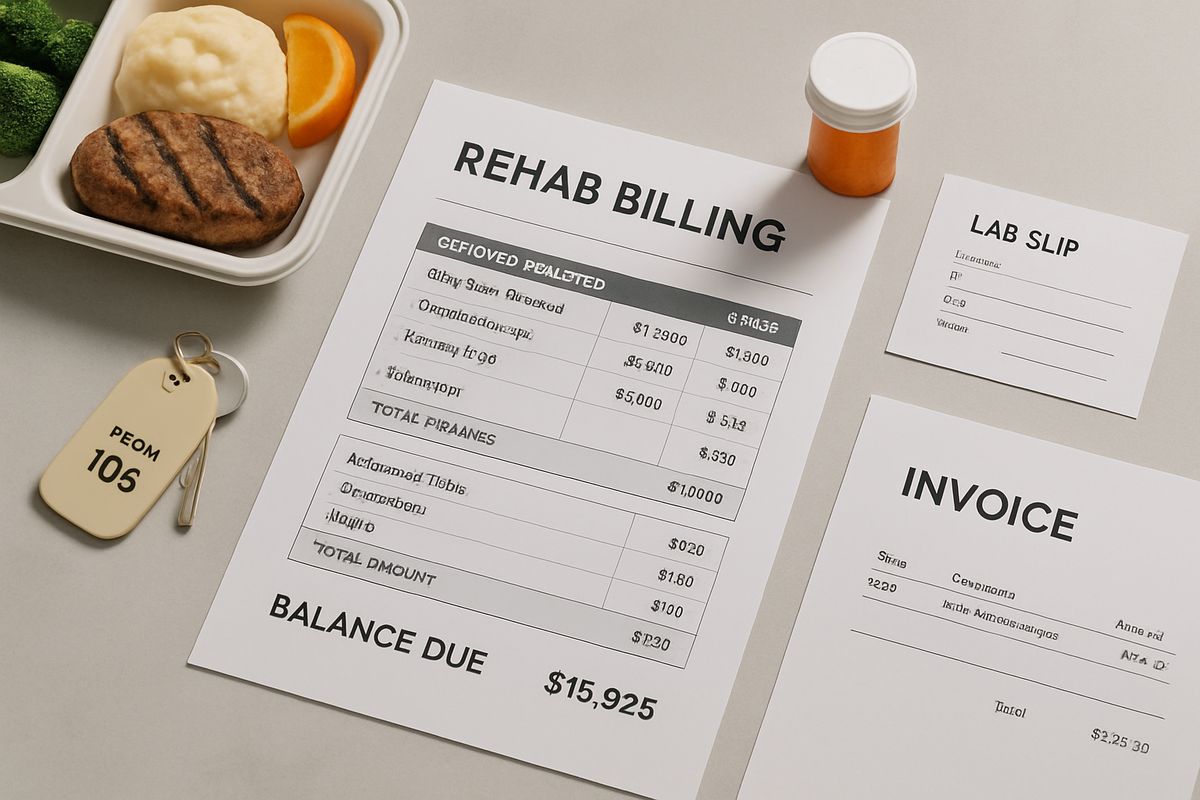
Some of the biggest surprise bills come from services people assume were already covered. Detox is a common one. So are psychiatric evaluations, physician fees, lab work, medications filled by an outside pharmacy, transportation, specialty trauma therapy, family intensives, and aftercare planning beyond discharge.
Some centers also charge an upfront intake or admission fee. Research notes that some rehab centers charge an admission fee of about $3,000 to $4,000, which can be a major surprise if you were only focused on the daily rate.
If you want a fuller picture of what private coverage often does and does not handle, it helps to review how PPO rehab benefits are usually structured before you commit.
Detox can change the total cost more than people expect
Detox is often the part that changes the math the most.
Many people need detox before they can safely begin inpatient rehab, and detox is frequently billed separately or at a higher medical rate. That means the quote for a 30-day stay may not include the first few days of medically supervised withdrawal at all.
The lower end of detox pricing can look manageable. Research shows the cheapest medical detox programs can be around $1,750. But that number usually reflects simpler cases, limited duration, or lower-acuity settings. Once you add round-the-clock monitoring, medications, or hospital-level oversight, the cost rises quickly.
When detox is billed separately from rehab
A common admissions conversation goes like this: the center quotes the residential stay, then explains that detox is a separate level of care. That separate bill may cover monitoring, physician management, withdrawal medications, labs, and a higher staffing ratio during the first phase of treatment.
Sometimes detox happens at the same campus, but under different billing. Sometimes it happens in a hospital or partner facility first. Either way, the practical lesson is simple: ask if the quote starts on day one of detox or day one of residential treatment.
This is also where it helps to understand how detox benefits are often handled by PPO plans, because coverage rules for withdrawal management can differ from coverage for residential care.
Why alcohol, benzos, and opioid cases often cost more upfront
Not all detox is priced the same. Alcohol and benzodiazepine withdrawal can be medically risky, and opioid withdrawal often requires medication support and close monitoring, especially when there are co-occurring mental health or medical issues.
Higher risk means more staff time, more nursing, more physician involvement, and more medication management. So the first few days can cost disproportionately more than the rest of the stay. Honestly, this is one reason the cheapest quote is not always the safest choice.
Length of stay is one of the biggest price drivers
Length of stay is one of the clearest drivers of the cost of inpatient rehab.
That makes intuitive sense. More days means more room, more staff time, more therapy, more meals, and more medical oversight. But longer care is not just “30 days times two.” Some programs offer a lower per-day rate for extended stays, while others add specialized services as treatment progresses.
The smarter way to think about this is value over the full episode of care, not just sticker shock on day one.
What 30 days usually costs
For many families, 30 days is the reference point because it’s the most common initial recommendation. Research says a typical 30-day inpatient stay usually lasts 28 to 30 days and may cost $5,000 to $20,000, averaging $12,500.
A 30-day stay may fit someone with a shorter substance use history, strong family support, stable housing, and fewer co-occurring mental health concerns. It can also be the first approved block of time from an insurer, with further days reviewed later.
But 30 days is not magic. It’s just a starting unit the industry uses a lot.
What 60 to 90 days usually costs
Longer treatment often makes more clinical sense for people with relapse history, dual diagnosis, unstable home environments, or long-standing addiction patterns. The published range for 60- to 90-day programs is wide, from roughly $12,000 to $60,000, with average estimates around $36,000.
That sounds like a huge jump, because it is. But longer care can sometimes lower the daily rate and improve the odds of stabilizing before returning home. For some people, that makes it the less expensive option in the long run, even if the upfront number is harder to swallow.
Why one rehab center costs $6,000 and another costs $60,000
Price gaps between rehab centers can look absurd at first. They usually make more sense once you separate clinical cost drivers from luxury upgrades.
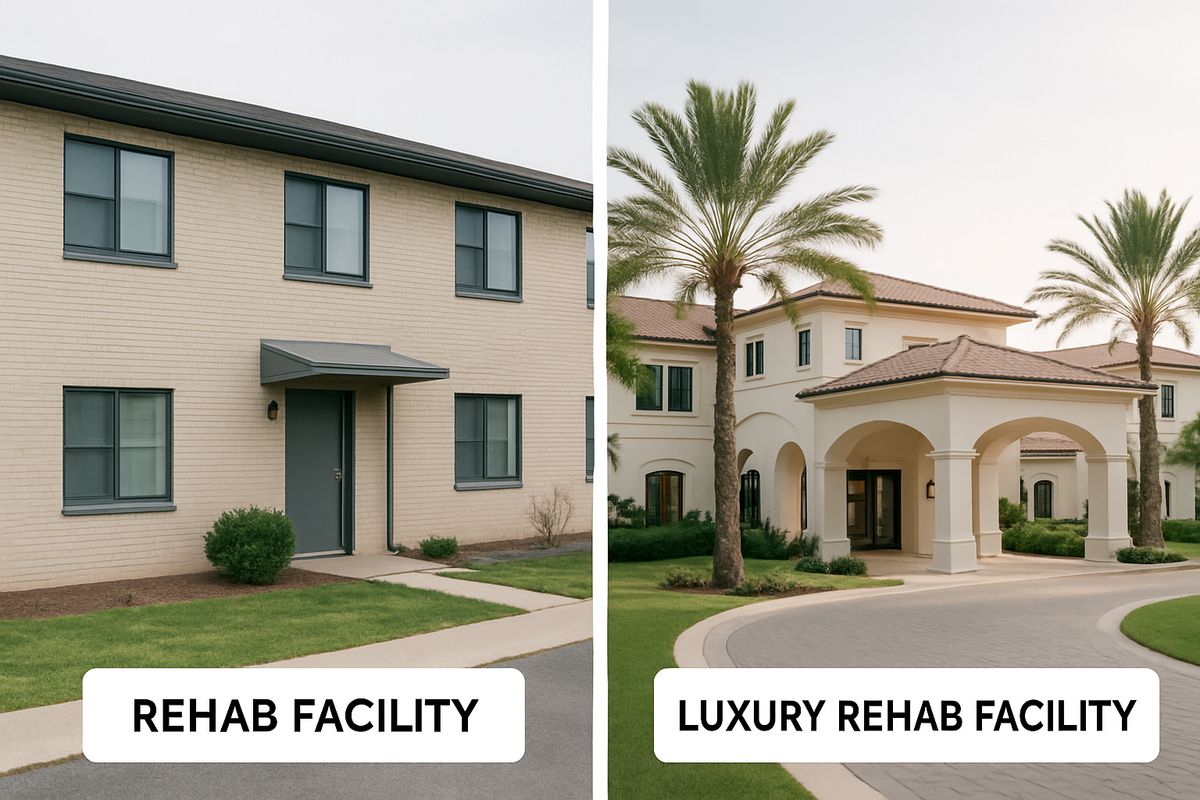
A lower-priced program might be a basic residential center with shared rooms, standard therapy hours, and limited on-site medical staffing. A much higher-priced program may include 24/7 nursing, psychiatric coverage, specialty therapies, private accommodations, and a destination setting designed for privacy.
That doesn’t mean expensive always means better. It means you need to know what you’re actually paying for.
Facility type, staffing, and medical complexity
Hospital-based programs and higher-acuity facilities usually cost more because they deliver more medical care. If a patient needs regular physician oversight, medication adjustments, psychiatric stabilization, or around-the-clock nursing, the staffing expense climbs quickly.
Standard residential treatment is usually less medically intense. It still offers structure and therapy, but not always the same medical depth. That difference matters if someone has withdrawal risk, suicidality, severe anxiety, trauma symptoms, or a history of complicated detox.
In short, staffing is not fluff. When it supports safety, it has real value.
Location, travel, and privacy
Location affects pricing more than many families realize. Research shows average residential treatment spending can range from $42,195 in Idaho to $66,538 in Washington, D.C., which gives you a sense of how much geography can move costs.
Destination treatment also adds travel expenses, private transportation, and sometimes companion lodging for family visits. But for professionals, public-facing clients, or anyone needing distance from familiar triggers, traveling can offer real clinical and practical benefits. Privacy is not just a luxury feature. Sometimes it is the reason treatment works.
Amenities versus clinical value
Private rooms, premium food, massage, fitness centers, executive workspaces, and ocean views can make rehab more comfortable. Comfort matters. It can reduce friction and help someone stay engaged.
But amenities are not the same as treatment quality. A beautiful campus does not tell you how often patients see licensed clinicians, whether the program treats co-occurring trauma well, or how solid the discharge planning is. Ask about therapy intensity, medical staffing, and outcomes-related practices before you let aesthetics make the decision.
What insurance may actually pay for inpatient rehab
Private insurance can lower rehab costs dramatically, but only when the details line up. That means medical necessity, plan benefits, network status, authorization, and billing all have to work together.
This is why two statements can both be true: insurance often makes inpatient rehab much more affordable, and families still get blindsided by bills. The second problem usually happens when people rely on vague promises instead of verified benefits.
How PPO coverage usually works for rehab
A PPO gives you more flexibility than many other plan types, especially if you want to travel to a program that feels like the best fit. But flexibility does not mean open-ended coverage.
Your deductible is the amount you pay before the plan starts sharing more of the cost. Your copay is a fixed amount, though inpatient behavioral health often uses coinsurance instead. Coinsurance is your percentage of the covered bill after the deductible. Your out-of-pocket maximum is the cap on what you should owe for covered services in a plan year, though out-of-network balance bills may still sit outside that cap.
In network means the facility has a contract with your insurer. Out of network means it does not. PPO plans often cover both, but your share is usually higher out of network, and the billing gets messier.
If you’re still sorting through the basics, a guide on what private plans usually pay for rehab care can make the insurance language much easier to decode.
Medical necessity, prior authorization, and utilization review
Insurers do not approve inpatient rehab just because someone wants it. They approve it when clinical documentation supports that level of care. In plain English, the records have to show why outpatient treatment is not enough and why 24-hour structure or medical oversight is needed.
Preauthorization is the upfront approval process. Utilization review is what happens during treatment, when the facility sends updates to justify more days. Behavioral health billing guidance stresses that prior auth and extension requests protect covered days, and that weak documentation can lead to denials or clawbacks.
That’s frustrating, but it’s normal. Good programs know how to manage this process and keep families informed.
In-network versus out-of-network, what it means for your bill
“We accept insurance” is not the same as “we are in network.” That difference can change your cost by thousands.
In network, the facility agrees to contracted rates. Out of network, the insurer may reimburse only a portion of what it considers reasonable, and the center may bill you for the rest. That is balance billing, and it is one of the biggest reasons a seemingly affordable out-of-network stay becomes expensive fast.
The same facility can be manageable for one person and financially unrealistic for another, simply because their PPO benefits are different. That’s why benefit verification matters more than advertised pricing.
A simple example of what you might pay with private insurance
Insurance math feels abstract until you see it in motion. Here are two simplified examples that show how real bills can unfold.
These are illustrations, not quotes. Actual numbers vary by plan, facility contract, and approved length of stay.
Example: in-network PPO stay with deductible and coinsurance
Imagine a 30-day inpatient stay billed at $18,000 in network. You still have $2,000 left on your deductible, and your plan then pays 80% of covered charges while you pay 20% coinsurance until you hit your out-of-pocket maximum.
In that case, you might pay the first $2,000 yourself. After that, the remaining covered amount is split 80/20. If your coinsurance adds another $3,200 before you hit the plan’s out-of-pocket maximum, your total responsibility could land around $5,200 for the stay. If you had already spent a lot on healthcare earlier in the year, it could be less.
That’s why “the program costs $18,000” and “you’ll pay $5,200” can both be true.
Example: out-of-network PPO stay at a destination rehab
Now imagine a destination rehab charges $30,000 for the same 30 days, but it is out of network. Your PPO has out-of-network benefits, yet the insurer allows only $18,000 of that charge and reimburses a percentage of the allowed amount after a separate deductible.
You may owe that out-of-network deductible, your coinsurance on the allowed amount, and the difference between the facility’s full charge and the insurer’s allowed amount. That unpaid difference can be large. So even with a strong PPO, an out-of-network stay can leave you with a bill far above your in-network out-of-pocket maximum.
This is where families often feel caught off guard. The center may truly be excellent, but reimbursement and balance billing can change the decision.
If you’re looking at medical inpatient rehabilitation, the numbers work differently
Some readers searching “inpatient rehab” are not looking for addiction treatment at all. They mean rehab after a stroke, joint replacement, spinal injury, brain injury, or serious illness. That care follows different rules, especially under Medicare.
So let’s separate it cleanly.
Medical inpatient rehabilitation is a hospital-level service for people who need intensive therapy, medical supervision, and coordinated care. It is not priced like residential addiction treatment, and Medicare coverage is much more standardized.
What Medicare covers in an inpatient rehabilitation facility
Medicare covers medically necessary inpatient rehabilitation when a doctor certifies that the patient needs intensive rehab, continued medical supervision, and coordinated care. Under Medicare, inpatient rehabilitation facilities are covered as part of inpatient hospital care, and the amount you pay depends on your situation, including the facility type and whether the hospital accepts Medicare.
Covered services generally include a semi-private room, meals, nursing, therapy services, prescription drugs, and medical supplies. In other words, Medicare recognizes this as serious medical care, not a wellness service.
What Medicare patients pay in 2026
For 2026, Medicare’s numbers are straightforward. The Part A deductible is $1,736 for each benefit period, and days 1 through 60 cost $0 after that deductible. After day 60, patients pay $434 per day for days 61 through 90. After day 90, lifetime reserve days cost $868 per day.
A new deductible may not apply if the rehab stay falls within the same benefit period as a prior hospital stay. That detail matters, because it can significantly change what someone owes after a major illness or surgery.
What Medicare does not cover
Covered does not mean every possible charge disappears. Medicare does not cover private-duty nursing, a private room unless medically necessary, phone or TV charges billed separately, or personal items.
That may sound minor compared with the hospital bill, but these extras still matter for families trying to budget a longer recovery.

Why rehab pricing keeps shifting
Rehab pricing is not static. Facilities respond to staffing costs, payer contracts, utilization management, and government reimbursement updates. So the numbers you saw even a year ago may already be stale.
That does not mean pricing is random. It means the system around rehab is always being adjusted, and those changes eventually affect what patients see.
The 2026 CMS payment update, in plain English
For medical inpatient rehabilitation facilities, CMS finalized a 2.6% increase in FY 2026 Medicare payment rates. CMS also estimated that the FY 2026 updates will increase aggregate IRF payments by $340 million.
In plain English, Medicare is paying these facilities a bit more overall. CMS said that update reflects a 3.3% market basket increase minus a 0.7 percentage point productivity adjustment. Patients do not pay those formulas directly, of course, but these changes influence facility finances, contract negotiations, and long-term pricing trends.
Why experts still debate whether rehab is overpaid or underpaid
Here’s where it gets interesting. While CMS finalized that increase, MedPAC recommended a 7% reduction in 2026 Medicare payment rates for inpatient rehabilitation facilities.
That disagreement tells you something useful: rehab reimbursement is a live policy debate, not a settled issue. Some experts think payments need to rise to support staffing and patient care. Others think certain sectors are being paid too much relative to costs. Over time, those pushes and pulls can affect access, network participation, and patient-facing pricing.
The smartest questions to ask before you commit
A short phone call can save you from a very long billing headache.
When families feel rushed, they often ask only one question: “How much is rehab?” The better approach is to ask enough questions to understand the full episode of care, the insurance process, and the financial risk if things change mid-stay.
Questions to ask the rehab center
Ask whether detox is billed separately or included in the quoted amount. Ask whether the quote is per day, per week, or per program. Ask what services are included, and which ones may be billed on top, especially medications, labs, physician visits, and psychiatric evaluations.
Also ask how often patients see a physician or prescribing clinician, what family programming costs, and what happens if insurance approves fewer days than expected. If the facility is out of network, ask whether you could be billed for the difference between the insurer’s allowed amount and the full charge.
Finally, ask for the estimate in writing when possible. Verbal assurances are easy to misunderstand.
Questions to ask your insurer
Ask whether the facility is in network for your specific plan, not just “accepted.” Confirm your deductible, coinsurance, and out-of-pocket maximum for both in-network and out-of-network behavioral health benefits.
Ask whether prior authorization is required for detox, residential treatment, or both. Ask what level of care is covered, how continued stay reviews work, and whether balance billing can apply out of network. Ask for reference numbers for the call and keep notes.
A little paperwork now can prevent a lot of panic later.
Common cost surprises families run into
Families are often shocked by rehab bills, not because they were careless, but because the billing process is genuinely confusing.
The good news is that most cost surprises follow a few common patterns. Once you know them, they are easier to avoid.
“The quote sounded lower than the final bill”
This usually happens because the original quote covered only the base residential stay. Later, charges appear for detox, physician services, outside pharmacy bills, labs, transportation, admission fees, or extra days beyond the initial plan.
Sometimes the quote was honest but incomplete. Other times it was simply too vague. Either way, the fix is the same: ask for a detailed estimate and ask what is not included.
“We thought insurance would cover the whole stay”
Insurance rarely approves a long inpatient stay all at once. Approval often happens in blocks of days, with continued review based on progress notes and clinical need. For higher levels of care, payers expect active treatment every billed day, and if documentation is weak, they may deny additional days or even recoup payment later.
So yes, insurance may cover rehab. But it may cover five days first, then review again. That is normal, even though it feels unsettling.
“We chose the best center, but travel added more than expected”
Travel costs can pile up quietly. Flights, rides to and from the airport, hotel stays for visiting family, missed work, child care, and follow-up appointments after returning home all add to the true cost of treatment.
That does not mean traveling is a bad choice. It means the real budget should include more than the facility invoice.
When paying more may be worth it, and when it probably isn’t
Higher cost is sometimes justified. Sometimes it really is mostly about comfort and branding.
The smart move is not to avoid expensive care on principle. It is to ask whether the higher price is tied to clinical need, safety, and long-term stability.
Signs a higher-cost program may offer real value
A more expensive program may be worth it when someone needs higher-acuity medical care, dual-diagnosis treatment, trauma-informed therapy, or stronger psychiatric support. Better staffing ratios, stronger relapse planning, consistent family involvement, and real discharge coordination also add meaningful value.
Privacy can matter too. For professionals, executives, creatives, or public-facing clients, discretion may be part of what makes treatment possible in the first place. If a private setting helps someone actually enter care and stay engaged, that is not trivial.
Signs you may be paying mostly for amenities
Beautiful surroundings can help, but they are not proof of better treatment. If the sales pitch leans hard on private chefs, designer rooms, spa extras, or resort-like perks, and says little about clinical credentials or therapy structure, take that as a signal.
Ask how many individual sessions are provided each week. Ask what evidence-based therapies are used, how psychiatric care is handled, and what the discharge plan looks like. Comfort is nice. Competent treatment is the point.
Ways to make inpatient rehab more affordable
You do not need to choose between quality and chaos. There are practical ways to lower out-of-pocket costs while still protecting clinical fit.
Most of them come down to clarity, timing, and willingness to compare the whole care path instead of one sticker price.
Verify benefits before admission
This is the single best step for reducing financial uncertainty. Get a real benefits check before admission. Not a general statement that the center “takes PPOs,” but an actual verification tied to your plan.
Ask for written estimates when possible. Ask what happens if authorization is denied, shortened, or moved to a lower level of care. And ask whether detox is billed under the same benefit structure as residential treatment.
Ask about payment plans and financing
Many private programs offer payment plans or work with third-party financing companies. Depending on your situation, you may also be able to use an HSA, FSA, or employer benefits.
If you’re trying to map out the safest way to cover treatment costs, it helps to review practical ways families piece together payment without guessing. The biggest advantage is not just lowering stress. It’s making sure cost questions do not delay needed care.
Consider step-down care strategically
Some patients lower total treatment cost by stepping down from inpatient rehab to partial hospitalization or intensive outpatient once they are medically stable. That can preserve treatment momentum while reducing the daily spend.
This only works when the timing is right. Stepping down too early to save money can backfire if it leads to relapse or readmission. But when the clinical team agrees that it’s appropriate, strategic step-down care can be a smart financial and recovery decision.
How to compare rehab quotes without getting overwhelmed
Decision fatigue is real, especially when families are scared and trying to move fast. The easiest mistake is comparing centers by one number alone.
Instead, compare two or three programs using the same lens: total expected cost, insurance fit, medical needs, mental health support, and what happens after discharge. Suddenly the decision becomes much clearer.
Compare the total episode of care, not just the daily rate
A center with a lower daily rate may end up costing more if detox is separate, medications are extra, family work costs more, and aftercare is weak. A higher daily rate may actually include more of the care you would otherwise pay for separately.
So compare the full episode: detox, inpatient days, physician care, medication costs, labs, family programming, aftercare planning, and likely step-down treatment. Looking at the whole path gives you a truer number.
Put clinical fit first, then cost
Start with safety. Does the person need detox, psychiatric care, trauma treatment, or a highly structured setting? Next, look at insurance compatibility and the real out-of-pocket estimate. Only after that should amenities enter the picture.
The cheapest option is not always the least expensive in the long run. If poor fit leads to relapse, readmission, or another crisis, the total cost can be much higher, financially and personally.

The bottom line on what you’ll actually pay
The cost of inpatient rehab can range from a manageable insurance-based out-of-pocket bill to a very large private-pay expense, and the difference usually comes down to detox needs, length of stay, network status, and plan rules. PPO insurance can reduce costs a lot, but the only reliable way to know your number is to verify benefits, confirm authorization requirements, and get every expected charge broken down clearly. Before you commit, ask for a benefits check and a written estimate that spells out detox, inpatient days, medical services, medications, and any extras, because clarity up front makes a hard decision much easier.