
Private inpatient rehab for drug addiction is a big decision because it asks a lot from you right away: time off work, emotional honesty, family coordination, and real money. But staying stuck has a cost too, and it is often higher than people want to admit. If you are trying to decide whether private inpatient care is actually worth it, the answer depends less on the price tag and more on whether the level of care matches what your life and health require right now.
Why this question feels so urgent
People usually do not ask this question casually. They ask it after another failed attempt to quit, after detox becomes unavoidable, after relationships start cracking, or after a high-functioning life stops looking so functional behind closed doors.
The urgency is real because access to treatment is still far behind need. In 2021, only about 21.3% of people with a past-year substance use disorder received any treatment, and just 0.9% of the U.S. population age 12 and older received care at a specialty facility. At the same time, more than 85% of people with a substance use disorder receive no treatment, which helps explain why families so often feel they are trying to solve a medical crisis with too little support.
Then there is relapse. That word scares people, but it should not be misunderstood. NIDA states that relapse is often part of recovery for chronic substance use disorders, which means rehab is not a magic fix and also not a failure if recovery takes more than one attempt. Good news, this is easier to work with than it sounds. The real question is not “Will one stay cure everything?” It is “What kind of care gives this person the best chance to stabilize, stay engaged, and keep going after discharge?”
The short answer: yes, for the right person and the right program
Yes, private inpatient rehab can absolutely be worth it for the right person and the right program.
It tends to make sense when you need 24/7 structure, medical monitoring, separation from everyday triggers, privacy, and a full therapeutic reset that outpatient care cannot provide. That is especially true after detox, when physical withdrawal may be over but cravings, mood instability, sleep disruption, anxiety, depression, and relapse risk can still be intense.
But private inpatient rehab is not automatically the best option just because it is expensive or well-branded. Some people do better in outpatient settings. Some need a step-up only temporarily, then a strong step-down plan. And some programs look polished while offering very little individualized or evidence-based care. If you are comparing options, it helps to understand what strong clinical treatment actually includes, not just what the brochure highlights.
What private inpatient rehab actually includes
Private inpatient rehab is a live-in addiction treatment setting, usually following detox or including medically supervised withdrawal support when needed. You stay on site, follow a full daily schedule, meet with therapists and medical staff, attend groups, and build a treatment plan that addresses both substance use and the reasons it has become hard to stop.
That matters because detox and rehab are not the same thing. Detox is about safely getting substances out of your body and managing withdrawal. Rehab is about what comes next: learning how to live without returning to drugs, treating mental health symptoms, building coping skills, repairing relationships, and setting up a plan for continued care.
NIDA states that inpatient care means staying overnight in a hospital or clinic and is usually used for people who need 24-hour care for health problems related to substance use or to manage withdrawal symptoms. It also notes that residential programs provide extended care for weeks to months, often including counseling, medications, mutual support, and referrals to continuing care. In practice, many people looking into inpatient care are really looking for long-term residential treatment after detox, not just a few medically supervised days.
Compared with PHP or IOP, inpatient treatment removes you from the environment where active use keeps happening. That distance is often the point. If the home setting is chaotic, triggering, enabling, or simply too full of pressure, recovery usually needs more than a few hours of therapy each week.
What “private” usually means in the U.S.
“Private” can mean two slightly different things. Sometimes it means private-pay, where you or your family funds treatment directly. More often, it means treatment in a privately operated facility that accepts private insurance, especially PPO plans.
That distinction matters because private settings often offer more flexibility in admissions, shorter wait times, smaller caseloads, and easier travel between states. U.S. substance abuse treatment facilities widely accepted private-payment options in 2020, with 74.4% accepting private health insurance, so using insurance for residential care is common, not unusual.
Private programs may also offer more discretion, which matters for professionals, students, executives, and families who want privacy. But comfort is not the same thing as quality. A private room, scenic grounds, or chef-prepared meals can make treatment more tolerable, and sometimes that improves retention. Still, none of those features replace psychiatric support, individualized planning, or solid discharge coordination.
What “inpatient” means day to day
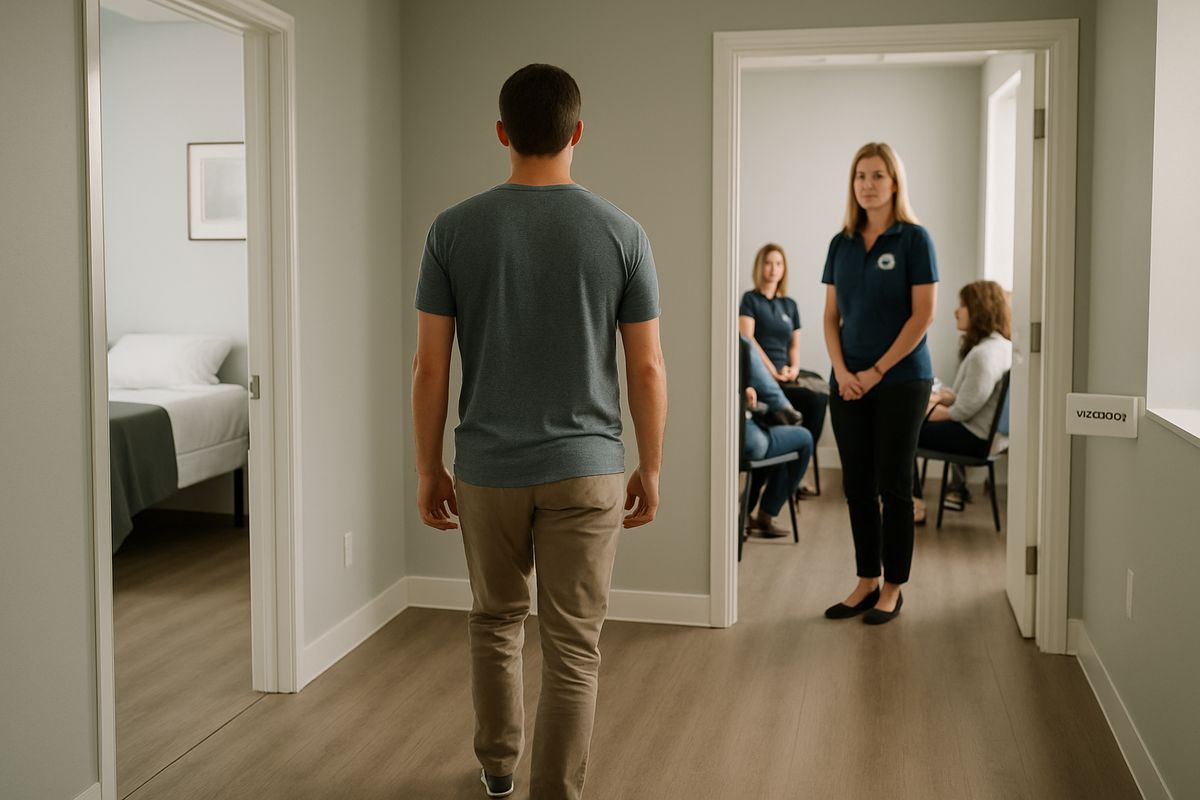
Day to day, inpatient rehab is structured on purpose. You wake up on schedule, meet with staff, attend groups, participate in therapy, take prescribed medications, eat regular meals, and move through the day with fewer chances to isolate or disappear into old routines.
A strong program includes individual therapy, group therapy, relapse prevention work, medication management, family involvement when appropriate, and support for co-occurring mental health issues. If you want a clearer picture of how a highly structured residential setting usually runs, it helps to see inpatient care as a therapeutic environment, not just a place to stay.
For many people, the biggest benefit is simple: there is enough support around you to interrupt the cycle. That is not a small thing.
When inpatient rehab tends to be worth the investment
Inpatient rehab is most worth the investment when continuing as you are has become more dangerous, more expensive, or less manageable than stepping away for treatment.
That includes obvious medical risk, but also slower forms of damage: job instability, constant hiding, worsening depression, panic, legal trouble, exhausted family members, and a pattern of “I can stop anytime” that has stopped being true. Good news, you do not need to wait until everything collapses to justify a higher level of care.
Severe addiction, repeated relapse, or risky withdrawal
If someone has tried to quit several times and keeps returning to use, that is not a character flaw. It is a sign that outpatient effort alone may not be enough. This is especially true when the substance involved carries serious withdrawal risk, such as alcohol, benzodiazepines, or opioids, or when use quickly resumes after each attempt to stop.
People in this situation often need a break from access, triggers, and routine. They also need care that does more than supervise the first few days. When inpatient rehab is the safer fit, the value comes from containment, stabilization, and enough treatment intensity to interrupt a relapse cycle that has become deeply established.
Research supports the idea that longer engagement helps. Residential drug rehab programs had a 65% completion rate when clients stayed 90 days or longer, compared with 40% for shorter stays. Completion is not the only outcome that matters, but it is a strong sign that people are staying in care long enough to get real traction.
Co-occurring mental health issues or an unsafe home environment
Addiction rarely shows up alone. Anxiety, depression, trauma, burnout, grief, insomnia, eating problems, and mood symptoms often sit right beside it. Sometimes substance use starts as self-medication. Sometimes it creates the mental health symptoms. Usually it is both.
NIDA recommends treating substance use disorders and co-occurring mental or physical health conditions at the same time because outcomes improve when care is integrated. That is why a program with true dual-diagnosis capability matters so much. If mental health care is treated as an afterthought, relapse risk usually stays high because the underlying drivers never get addressed. Readers comparing programs often benefit from understanding why integrated mental health and addiction care matters so much.
Home environment matters too. If there is active substance use at home, unstable housing, interpersonal conflict, violence, or constant pressure to return to normal too quickly, outpatient treatment may not stand much of a chance.
High-functioning professionals who need privacy and full separation from triggers
A lot of people who need inpatient rehab do not look like the stereotype. They go to work, answer emails, meet deadlines, and keep up appearances. They are lawyers, founders, nurses, freelancers, graduate students, sales leaders, designers, and parents. From the outside, things may look intact. Inside, they are unraveling.
For this group, private inpatient care can be worth it because it creates full separation from access, secrecy, and performance pressure. Privacy helps, but so does distance. Traveling for treatment can reduce distractions and make it easier to focus on recovery instead of managing everyone else’s expectations.
There is also a practical point here. If your life is organized enough to keep addiction hidden, it may be organized enough to keep outpatient treatment from disrupting the pattern. Sometimes the most effective move is to step out completely, stabilize, and rebuild before trying to function at full speed again.

When outpatient care may be the smarter choice
A balanced answer matters here: inpatient care is not always the smarter purchase.
Outpatient treatment usually costs less, interferes less with work and family routines, and can work very well for mild to moderate substance use disorders, especially when medical risk is low and home support is strong. That is one reason the outpatient segment held the largest revenue share at 73% in 2023. In other words, most addiction treatment is not happening in inpatient settings, and that is not automatically a problem.
Signs you may not need residential care
You may not need residential treatment if you have stable housing, reliable sober support, low withdrawal risk, no recent overdose history, and the ability to attend treatment consistently without immediately returning to use. Some people also do well in outpatient care when they are highly motivated, medically stable, and not dealing with severe co-occurring psychiatric symptoms.
For these cases, IOP or PHP may offer enough structure without requiring a full residential stay. That can be a smart use of insurance and personal resources, especially if you are able to engage fully and honestly while staying at home.
Why matching the level of care matters more than choosing the most expensive option
More treatment is not always better treatment. Better-matched treatment is better treatment.
The continuum of care matters more than prestige. One retrospective study of 6,633 adults receiving substance use disorder treatment across five levels of care showed exactly why addiction care should be viewed as a system, not a single event. If someone needs detox, then residential, then step-down care, that sequence often makes sense. If someone can safely begin in outpatient and stay engaged, that may be the smarter path.
This is where private programs should earn their cost. They should not just sell intensity. They should assess what level is actually appropriate, then adjust as clinical needs change.
What outcomes make rehab “worth it”
A rehab stay is worth it when it improves life in durable, measurable ways, not just when it gets someone through 30 days.
NAATP says common treatment outcomes include reduced substance misuse, better physical and mental health, stable housing and employment, reconnection with family and community, and legal stability. That is the right frame. If someone is using less or not at all, sleeping normally, thinking more clearly, going back to work, showing up in relationships, and staying connected to care, treatment is doing its job.
Good news, recovery does not have to look perfect to be real. For many people, “worth it” starts with fewer crises, more honesty, and a much lower risk of overdose or another collapse.
Why length of stay often changes the math
Short stays can help with detox, stabilization, and initial momentum. But they often do not give recovery enough time to take hold, especially when mental health symptoms, denial, and lifestyle disruption are part of the picture.
The numbers here are hard to ignore. Seventy-five percent of people who completed a 90-day inpatient rehab program showed a significant reduction in drug use at 6-month follow-up. That does not mean everyone needs exactly 90 days. It does mean that treatment length often affects retention, skill-building, and post-discharge stability.
If you are moving from detox into residential care, think in phases, not in a one-month box. Stabilization is phase one. Deeper therapy, routine change, relapse prevention, and discharge planning come after that.
Why aftercare can matter as much as the inpatient stay
The biggest mistake people make is treating discharge as the finish line.
Research keeps pointing the same way. Patients were less likely to relapse when they stepped down into follow-up care within 14 days of discharge. Aftercare attendance reduces relapse by 50%, bringing relapse down to 25% at 6 months. Those are not small gains. They are the difference between a treatment episode that fades and one that keeps working.
Strong aftercare includes outpatient therapy, psychiatry, medication support when appropriate, alumni programming, relapse planning, family guidance, and sometimes sober living. If you are evaluating programs, pay close attention to how they handle the move from detox and residential care into the next stage. A smooth transition is often where lasting recovery begins.
How much private inpatient rehab costs, and what insurance may cover
Private inpatient rehab is expensive, and readers deserve a straight answer about that.
You are paying for housing, staffing, therapy, medical oversight, care coordination, and a level of structure that outpatient programs do not provide. Some of the cost is justified by intensity. Some of it reflects geography, facility style, and business model. And some of it, honestly, is branding.
Common cost ranges for private inpatient rehab
A common range for private inpatient care is about $10,000 to $20,000 per 30 days, with private insurance paying roughly 40% of inpatient rehab costs. Luxury facilities can go much higher. The same report notes that some luxury rehabs charge $40,000 to $80,000 for 30 days.
That does not mean higher price equals better care. Amenities can increase comfort and sometimes help people stay in treatment, but they do not guarantee stronger therapy, better psychiatric care, or more thoughtful discharge planning. If you are mainly paying for aesthetics, the value may be poor.
For a closer look at benefits and limitations, it helps to understand how private insurance coverage for rehab usually works, especially when comparing in-network and out-of-network options.
Questions to ask about PPO coverage before you commit
PPO coverage can make private inpatient care far more realistic, but out-of-pocket costs still vary a lot. Deductibles, coinsurance, medical necessity reviews, out-of-network reimbursement, and approved length of stay all affect the final number.
Before committing, verify whether detox is covered separately, whether psychiatric care is included, how medication management is billed, whether step-down care like PHP or IOP is covered, and what happens if the insurer stops authorizing days mid-stay. Families often assume approval means everything is settled. It is not.
A center should be able to explain benefits clearly, estimate your financial responsibility, and tell you where uncertainty still exists. If they cannot do that, be careful.

What separates a high-quality private rehab from an expensive one
This is the part that matters most. Private treatment varies widely. Some programs are clinically strong and deeply organized. Others are beautifully marketed and surprisingly thin.
A high-quality rehab uses evidence-based treatment, individualized planning, integrated mental health care, skilled staff, clear outcomes tracking, and serious discharge planning. It does not rely on ambiance to distract from weak clinical substance.
Look for evidence-based treatment, not just nice surroundings
NIDA identifies behavioral therapies such as CBT, contingency management, motivational enhancement therapy, and 12-Step Facilitation as common treatments for substance use disorders. It also notes that contingency management can be especially effective for stimulant addiction. Good programs use these approaches intentionally, not randomly.
Medication matters too. Medication-assisted treatment combined with counseling increased treatment retention to 70% at 6 months, versus 40% for counseling alone. And WHO guidance cited in one treatment market report says opioid agonist maintenance therapy should be an integral part of comprehensive care. If a program treats opioid addiction but resists MAT on principle, that is a problem.
Family therapy, relapse prevention, trauma-informed care, and psychiatric support should all be available when clinically indicated. If you want to understand how therapy should work inside residential treatment, focus on whether the program can explain why each modality is used and for whom.
Make sure dual-diagnosis treatment is truly integrated
A rehab may say it treats dual diagnosis, but that phrase gets overused. Real integration means mental health assessment early in the stay, regular psychiatric follow-up, coordinated treatment goals, and therapy that addresses both substance use and mental health in the same plan.
It should not feel like addiction treatment on one side and anxiety or trauma treatment on the side. The work needs to connect. If panic drives drug use, the program should treat panic. If depression keeps someone disengaged, the program should treat depression. If trauma is central, the therapeutic approach should reflect that safely and skillfully.
Ask how the program tracks outcomes
This is one of the best filters available, and families often skip it.
NAATP says addiction currently lacks a standardized outcome measurement system, which makes it harder to compare programs honestly. That is exactly why serious centers should be able to tell you what they track. The FoRSE Outcomes Program collects standardized client outcomes data across public and private, inpatient and outpatient, telehealth and in-person models, and that gives you a benchmark for what good accountability looks like.
Ask about completion rates, average length of stay, step-down placement rates, follow-up attendance, relapse follow-up, patient satisfaction, and functional outcomes like work, housing, and relationships. If the answer is vague, or if they only talk about testimonials, keep looking.
Red flags that private inpatient rehab may not be worth the cost
Some programs are poor fits. Some are low quality. Some are both.
A high price can create false confidence, especially when families are scared and trying to move fast. Good news, a few red flags can save you from an expensive mistake.
Marketing promises that sound too good
Be cautious with any program that guarantees permanent sobriety, claims unusually high success without showing how it measures it, or leans heavily on “holistic” care without solid clinical depth underneath. Yoga, nutrition, fitness, and mindfulness can help. They are not substitutes for therapy, psychiatry, medication support, and relapse planning.
Pressure tactics are another warning sign. If the admissions process feels more like closing a sale than evaluating clinical fit, slow down.
Weak discharge planning and poor continuity of care
A rehab that cannot clearly explain the next step is leaving a major gap in care.
That is risky because relapse risk rises fast after discharge, especially if someone goes straight home without appointments, structure, or accountability. If the center does not arrange outpatient follow-up, discuss sober living when appropriate, plan medication continuation, and involve family in the transition, the inpatient stay may not hold.
One-size-fits-all treatment plans
Some programs put everyone into the same schedule with the same groups and call it personalized care. It is not.
Watch for limited psychiatric support, no MAT access, little family work, and treatment plans that ignore job pressures, school demands, legal issues, housing concerns, or trauma history. Addiction affects real lives, so treatment should reflect real life.
Common mistakes families make when choosing rehab
Families usually make mistakes for understandable reasons: fear, urgency, shame, and exhaustion. Nobody does their best shopping while in crisis.
Still, a few patterns come up again and again.
Choosing based on amenities instead of clinical fit
Private rooms, beautiful grounds, and comfort-focused extras can be appealing. Sometimes they genuinely help people settle in and stay longer. But they should come after questions about staffing, therapy quality, medical oversight, psychiatric access, and aftercare planning.
If the sales pitch starts with the pool and ends with “trust us” on treatment, the priorities are off.
Focusing only on detox or only on the first 30 days
Detox is a first step, not the whole plan. It handles immediate physical stabilization, but it does not resolve the thinking, behavior patterns, emotional pain, and environmental triggers that drive ongoing use.
The same is true of a fixed 30-day mindset. Some people do well with that length, but many need more time. If you are evaluating who benefits most from a longer residential stay, the main question is not what sounds manageable on paper. It is what gives recovery enough time to become real.
Waiting for a “rock bottom” moment
This idea does a lot of harm.
Substance use disorders are treatable medical conditions, and delaying care often increases health risk, legal risk, and family damage. You do not need an arrest, overdose, job loss, or public collapse to justify treatment. Earlier action is often the smarter and safer move.
Questions to ask before choosing a private inpatient rehab
When you call admissions, use the conversation to test quality, not just availability. You are not only asking, “Do you have a bed?” You are asking, “Can you actually treat this person well?”
Clinical questions
Ask how the program handles psychiatric evaluation, medication management, and co-occurring disorders. Ask whether detox is available on site or coordinated directly before admission. Ask which therapies are used, how often individual sessions happen, whether MAT is offered, and how family therapy is built into care.
Also ask how treatment plans are tailored. If the answer sounds generic, take that seriously. A good program should explain how care changes based on substance type, relapse history, mental health symptoms, work demands, and recovery goals.
Insurance and financial questions
Ask for benefits verification in writing if possible. Clarify whether the facility is in network, out of network, or a mix. Ask what your estimated out-of-pocket costs are, what happens if authorization changes during treatment, and whether there are separate bills for physicians, labs, medications, or psychiatric services.
For PPO plans, it also helps to ask whether the center will manage utilization reviews and appeals. Administrative support matters more than people expect.
Discharge and long-term recovery questions
Ask what step-down care they recommend, how quickly follow-up is arranged, and whether appointments are scheduled before discharge. Ask whether they help with sober living, outpatient placement, psychiatry, family planning, and coordination near home if treatment happens out of state.
If they cannot describe a concrete plan for the first two weeks after discharge, that is a gap worth noticing.
How to decide if private inpatient rehab is worth it for you or your loved one
Private inpatient rehab is worth it when the need for safety, structure, privacy, and immersive treatment is greater than the cost and disruption of stepping away. It is especially worth serious consideration if detox has already become necessary, relapse keeps repeating, mental health symptoms are tangled into the addiction, or the home environment makes sobriety hard to hold.
Look at the full picture: severity of use, withdrawal risk, past treatment history, ability to stay sober outside a controlled setting, mental health needs, family support, work and privacy concerns, and insurance reality. Then compare programs based on clinical depth, not pressure, branding, or amenities.
The next step should be calm and concrete: verify insurance, get a real clinical assessment, and compare private inpatient programs based on evidence, integrated care, and a clear plan from detox through discharge and beyond. That is how you decide with clarity, and it is how treatment becomes more than a temporary pause.

References
- coherentmarketinsights.com
- nida.nih.gov
- media.market.us
- gitnux.org
- finance.yahoo.com
- sciencedirect.com
- naatp.org