If you’re searching for drug detox, you’re probably not looking for theory. You want to know what happens, how hard withdrawal might be, how quickly you can get in, and whether it’s safe. Drug detox is the first stage of addiction treatment, focused on helping your body clear substances and stabilize through withdrawal so you can move into rehab with a clearer head and a much lower medical risk.
Early on, it helps to know the shape of the process. In this guide, you’ll learn:
- what detox does, and what it does not do
- when medical detox is the safer choice
- what happens before admission and in the first 24 hours
- how withdrawal differs by substance
- how medications are used during detox
- how long detox usually lasts
- what quality detox care should include
- why rehab should begin right after detox
- how to compare programs before you commit
What drug detox really means, and why it comes before rehab
Drug detox means the medically supervised process of managing withdrawal after you stop using drugs or alcohol. The goal is not to “fix” addiction in a few days. The goal is to help you get physically stable, reduce risk, and create a safe bridge into the next phase of treatment.
That distinction matters more than most people realize. Detox deals with the immediate physical effects of stopping substance use. Rehab deals with the reasons use kept going, the patterns around it, and the work of building recovery that lasts. Good programs treat detox as the beginning, not the finish line.
According to the Substance Abuse and Mental Health Services Administration, detoxification is best understood as a set of interventions that help a person manage acute intoxication and withdrawal safely (SAMHSA TIP 45). That sounds clinical, but the real-world version is simple: get safe first, then get better.
Detox vs. rehab: the difference that matters
Detox focuses on stabilization. Rehab focuses on treatment.
In detox, the team watches your symptoms, checks your vital signs, manages complications, and may use medications to reduce withdrawal distress or danger. In rehab, the work gets broader. You start addressing cravings, triggers, mental health symptoms, trauma, family stress, relapse patterns, and the day-to-day decisions that keep addiction going.
This is why people who only detox often end up right back where they started. Withdrawal may pass, but the addiction itself has not been treated. If you’re comparing programs, it helps to look at whether the center offers a direct path into ongoing care, especially a setting like living on-site after stabilization, where the transition is immediate and structured.
Why professional detox is often safer than quitting alone
A lot of people try to stop on their own before they ever call a treatment center. That impulse is understandable. It also goes wrong all the time.
Some withdrawal syndromes are mainly miserable. Others can become medically dangerous. Alcohol withdrawal can cause seizures, hallucinations, and delirium tremens, a severe state that can be life-threatening without treatment. Benzodiazepine withdrawal can also trigger seizures and serious nervous system complications. Opioid withdrawal is often less medically dangerous in otherwise healthy adults, but it can still be intense enough to push people back to use fast.
Medical detox lowers those risks because someone is actually watching what your body is doing. The American Society of Addiction Medicine notes that withdrawal management should match the severity of symptoms and the risk of complications (ASAM Clinical Practice Guideline). Good news, that is exactly what a proper detox setting is built to do.

When it’s time to consider medical detox
Some people know they need detox right away. Others keep trying to “taper down,” hoping this time will be different. If you’ve been unable to stop without severe symptoms, or if your family is seeing things escalate quickly, waiting usually makes the situation harder, not easier.
Medical detox is especially worth considering when the risk is not just discomfort, but what discomfort leads to. Panic, dehydration, heart strain, confusion, relapse, and overdose risk all rise when withdrawal is unmanaged. If privacy matters because of work, reputation, or family responsibilities, a supervised setting also gives you a more controlled and discreet way to start treatment.
Signs withdrawal could become risky
Certain red flags should push detox higher on the priority list. A history of severe withdrawal is one of the biggest. So is heavy daily use, especially over a long period. Mixing substances, such as alcohol with benzodiazepines or opioids with stimulants, adds another layer of risk because symptoms can overlap and shift quickly.
Mental health also matters. If you’re dealing with anxiety, depression, panic, trauma symptoms, or suicidal thoughts, withdrawal can intensify all of it. Past seizures, dehydration, vomiting, inability to keep fluids down, or repeated relapses after trying to quit alone are also strong signs that home detox is not the safest plan.
The catch is that people often underestimate their own risk. Families do too. That is why a professional screening matters before you assume you can manage it by yourself.
Who benefits most from a supervised setting
Supervised detox is often the better fit for people who need both safety and speed. That includes professionals who cannot afford a public crisis, people who want same-day or next-day placement, and families trying to stop the cycle before it gets worse.
It also tends to make more sense for people with private PPO insurance, because benefits may help cover a higher level of care than expected. If you’re sorting out costs before admission, it helps to understand how PPO plans typically apply to treatment, especially when detox and residential care are both being considered.
A supervised setting is also the better choice if you already know you’ll need inpatient care after detox. In that case, the goal is not just to get through withdrawal. It is to move smoothly into treatment without losing momentum.
What to expect before you arrive
Admissions can feel overwhelming when you’re already stressed, sick, or trying to help someone you love. In practice, the process is usually more straightforward than people expect. A good admissions team keeps it calm, gets the essential information quickly, and helps you move toward placement without making you retell your whole life story five times.
Before arrival, most of the work falls into three buckets: confirming logistics, checking clinical fit, and preparing what you need for the first few days. If you need urgent placement, these steps can often happen the same day.
Insurance verification, travel planning, and admissions calls
For people using private insurance, the first practical step is usually a benefits check. The admissions team will ask for basic insurance details, then verify whether your PPO plan includes detox, residential treatment, physician services, and related medical care. Coverage varies, but many people are relieved to learn that medically necessary detox is often a covered benefit.
The admissions call usually includes questions about what substances you’ve been using, how much, how often, when you last used, whether there is a history of seizures or overdose, and whether there are mental health concerns. These questions are not there to screen you out. They help the team decide how urgent admission is and what level of care is appropriate.
If travel is part of the plan, many centers can coordinate arrival from out of state, including same-day admissions. This matters because people often seek treatment outside their local area for privacy, better clinical care, or easier separation from triggers. If you’re comparing levels of care, a guide to how treatment settings actually differ can make those choices less confusing.
What to bring, what to leave at home
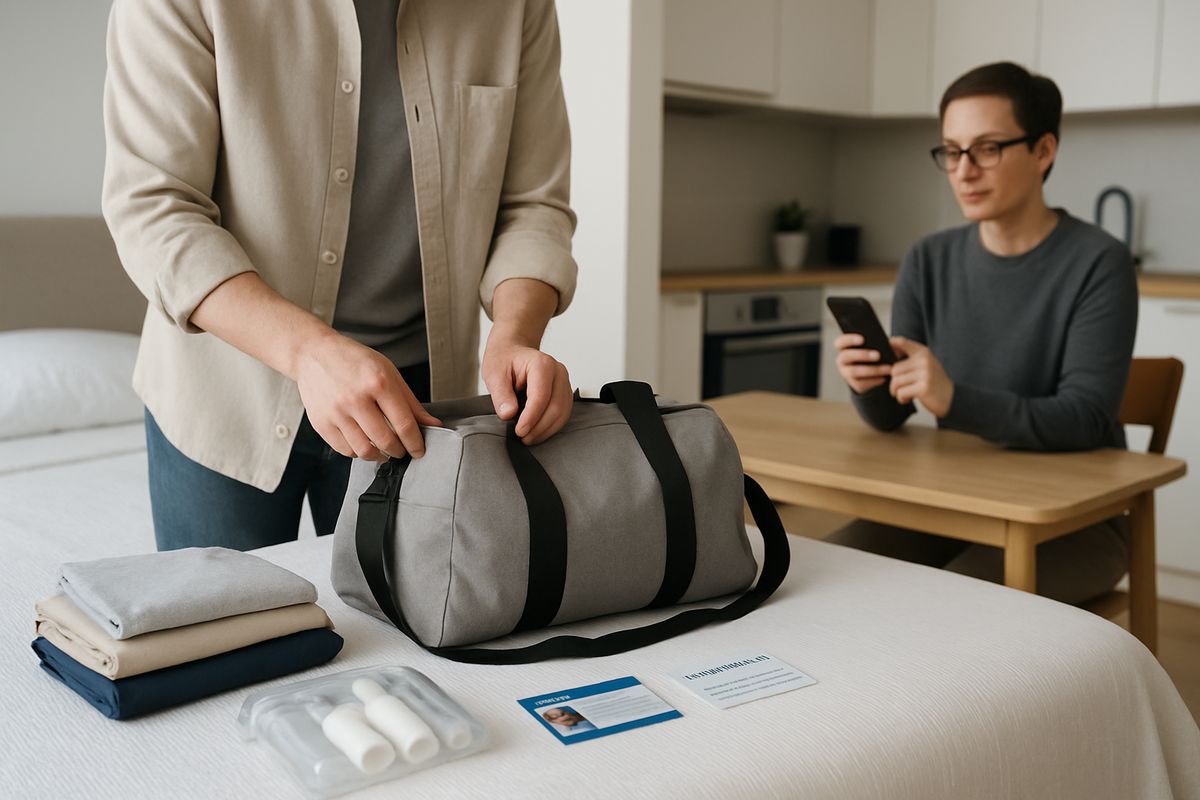
Packing for detox should be simple. Bring what helps with admission and comfort, not your whole routine.
Most centers ask for:
- a photo ID
- your insurance card
- prescribed medications in original bottles
- comfortable clothing
- sleepwear and basic toiletries
- a list of emergency contacts
- any relevant medical documents
Leave valuables, weapons, illicit substances, and anything not approved by the facility at home. Many treatment centers also limit electronics, supplements, mouthwash with alcohol, and some personal care items. That can feel strict, but the point is safety, not control.
Honestly, overpacking just creates more stress. A few days of clean, comfortable basics is usually enough to start.
What happens during your detox intake and first 24 hours
The first day is usually less dramatic than people fear. Most of it involves assessment, monitoring, and helping you settle in. If you arrive anxious, shaky, embarrassed, or exhausted, none of that is unusual. Staff in a quality detox program see it every day, and the good ones know how to keep the process calm.
The main goal of the first 24 hours is to understand your medical needs quickly and start managing withdrawal before symptoms intensify.
Medical assessment and substance use history
At intake, staff will ask about the substances you’ve used, how long you’ve used them, how much, and when you last used. They’ll also review past detox attempts, prior rehab episodes, overdose history, seizure history, current medications, chronic health conditions, allergies, and any mental health symptoms.
This is the moment to be as honest as possible. If you used more than you planned to admit, say so. If you mixed substances, say that too. Good clinicians are not looking for a confession. They are looking for the details that keep you safe.
You may also be asked about sleep, appetite, pain, panic, depression, trauma, and self-harm thoughts. That can feel personal fast. But it matters because detox is rarely just physical. The best programs assess the whole picture from the start, especially when withdrawal and mental health symptoms overlap.
Withdrawal monitoring, labs, and personalized planning
Once the intake is done, the team begins active monitoring. That usually includes blood pressure, pulse, temperature, oxygen levels, hydration status, and regular symptom checks. Depending on your situation, you may also have lab work, toxicology screening, or other medical tests.
Clinicians often use structured withdrawal scales to track symptom severity. For alcohol, one common tool is the CIWA-Ar. For opioids, the COWS scale is widely used. These tools do not replace clinical judgment, but they help the team adjust care based on what is actually happening, not guesswork.
From there, you get a detox plan tailored to your situation. That may include medication, hydration support, rest, nutritional support, psychiatric review, and a plan for what comes next after stabilization. If you want a clearer sense of what a quality safe, medically supported detox setting should include, that comparison can be useful before admission.

What withdrawal can feel like, by drug type
Withdrawal is different for every person, but it is not random. The substance involved, the amount used, how long you’ve been using, your overall health, and whether you use more than one drug all shape the experience.
Good news, not every detox is a nightmare. Some are uncomfortable and tiring. Some are intense. A few can become dangerous without close care. Knowing which is which helps you make better decisions instead of relying on fear or denial.
Opioid detox
Opioid withdrawal often feels like a bad flu crossed with severe anxiety and insomnia. Common symptoms include muscle aches, sweating, chills, runny nose, nausea, vomiting, diarrhea, restlessness, yawning, dilated pupils, and strong cravings.
It usually feels awful, especially in the first several days, but in most cases it is less medically dangerous than alcohol or benzodiazepine withdrawal. The bigger risk is relapse. After even a short period without opioids, your tolerance drops. If you return to the amount you used before detox, overdose risk climbs sharply. The Centers for Disease Control and Prevention has repeatedly warned about overdose risk tied to opioids and changing tolerance (CDC overdose prevention).
Alcohol and benzodiazepine detox
This is the category that deserves the most caution. Alcohol and benzodiazepine withdrawal can progress from anxiety and tremors to seizures, severe confusion, hallucinations, and delirium tremens. According to the National Institute on Alcohol Abuse and Alcoholism, severe alcohol withdrawal can be life-threatening without proper treatment (NIAAA alcohol withdrawal overview).
Symptoms may start within hours after the last drink or dose, though timing varies. Some people begin with shakiness, sweating, nausea, agitation, and insomnia. Others deteriorate more rapidly. That unpredictability is part of the problem.
If there is any real possibility of alcohol or benzo withdrawal, this is not the time to gamble on self-detox. Prompt medical supervision is the safer move.
Stimulants, cannabis, and other substances
Withdrawal from stimulants like cocaine or methamphetamine is often less medically dangerous than alcohol or benzodiazepines, but it can still be emotionally brutal. Fatigue, depression, irritability, sleep changes, agitation, slowed thinking, and cravings are common. Some people crash hard and feel flat, hopeless, or unable to function for days.
Cannabis withdrawal can include irritability, anxiety, poor sleep, reduced appetite, vivid dreams, and restlessness. It is often minimized, but for heavy daily users it can be very real.
The same goes for “less severe” withdrawal in general. Even when symptoms are not likely to cause seizures or major medical instability, distress can still be strong enough to trigger relapse, conflict, or unsafe behavior. That is one reason professional support still matters.
How medications can make detox safer and more comfortable
Medications are not used in every detox, and they are not one-size-fits-all. But when they are used well, they can reduce suffering, lower complication risk, and make it much more likely that you stay in treatment long enough to stabilize.
This is not about replacing one addiction with another, a fear families often have. It is about using evidence-based medical care during a vulnerable window. Research published in the medical literature supports medication-based approaches for many withdrawal syndromes, especially opioids and alcohol, because they improve safety and treatment retention (review of pharmacological detox strategies).
Medications often used for opioid withdrawal
For opioid withdrawal, clinicians may use buprenorphine (often in Suboxone form), methadone, clonidine, and medications that target specific symptoms such as nausea, diarrhea, body aches, or insomnia.
Buprenorphine can reduce withdrawal and cravings significantly when started at the right time. Methadone may be used in certain settings and for certain patients, especially when there is a longer opioid history or a need for structured opioid treatment. Clonidine can help with sweating, agitation, and some physical symptoms, though it does not treat cravings the way buprenorphine can.
The exact choice depends on your medical status, opioid history, and treatment goals. Some people want short-term withdrawal support. Others are better served by starting a medication plan they will continue after detox.
Medications used for alcohol and sedative withdrawal
For alcohol and benzodiazepine withdrawal, medication is often the difference between manageable and dangerous. Benzodiazepines are commonly used in alcohol detox to prevent seizures and reduce severe withdrawal symptoms. In benzodiazepine detox itself, clinicians may use taper protocols, sometimes with longer-acting medications, to bring the dose down more safely over time.
Other medications may be added depending on sleep problems, nausea, blood pressure changes, or seizure risk. These plans need close medical oversight because under-treating withdrawal can be dangerous, and over-sedation can be dangerous too.
That balance is why experienced physician-guided detox matters. It is not just about having medication available. It is about adjusting the plan based on how the patient responds hour by hour.
What medication-assisted treatment may look like after detox
For some people, detox ends when withdrawal is over. For others, the smarter move is to continue medication into ongoing treatment. This is especially common with opioid use disorder and, in some cases, alcohol use disorder.
Medication-assisted treatment may include buprenorphine, methadone, or naltrexone for opioids, and medications such as naltrexone or acamprosate for alcohol. These medications do not replace therapy, structure, or recovery work. They support it. If a center offers both detox and continued treatment planning, you are more likely to get a consistent handoff instead of a gap in care.
How long drug detox usually takes
This is one of the first questions people ask, and for good reason. You want to know how long work will be interrupted, how long your loved one may be away, and when you’ll start feeling human again.
Most detox stays last several days, but the real answer is that detox is individualized. A short stay can be enough for some opioid or alcohol cases. Benzodiazepine tapers can take longer. Polysubstance use can stretch the timeline too.
Typical detox timelines by substance
Opioid detox often lasts around 4 to 7 days for acute withdrawal, though lingering sleep issues and cravings can continue beyond that. Alcohol detox commonly falls in a 3 to 7 day range, with the most intense symptoms often clustering in the first few days. Benzodiazepine detox can take longer because tapering may need to happen more gradually for safety.
Stimulant withdrawal may not require the same medical management timeline, but the emotional crash can remain significant for days or longer. Cannabis withdrawal usually peaks within the first week, though sleep disruption may continue after that.
Those are broad ranges, not promises. A reputable center will avoid giving you an unrealistically neat schedule before an assessment.
Factors that can shorten or extend detox
Several things change the timeline. Using multiple substances is a big one. So are age, liver function, hydration, nutritional status, chronic medical conditions, and co-occurring psychiatric symptoms.
Your withdrawal history matters too. People who have gone through repeated withdrawals, especially from alcohol, can sometimes have more severe future episodes. Medication can shorten the roughest phase in some cases, but it can also extend the formal detox timeline if a taper is clinically safer.
Here’s where it gets practical: do not choose a program because it promises the fastest detox. Choose one that is willing to detox you safely and then move you into the right next step.
What care and support you should receive during detox
Quality detox is not just a bed and a blood pressure cuff. You should expect active medical support, symptom management, emotional reassurance, and a plan for what follows. If a program acts like detox means simply waiting it out, keep looking.
This is also where families can tell the difference between bare-minimum supervision and actual treatment readiness.
24/7 monitoring, hydration, nutrition, and rest
A strong detox program provides round-the-clock monitoring, especially during the period when symptoms can escalate. Staff should be checking on withdrawal symptoms, monitoring vitals, responding quickly to changes, and supporting physical comfort as much as possible.
Hydration and nutrition matter more than people think. Withdrawal often comes with nausea, sweating, vomiting, diarrhea, and poor appetite, which can leave you depleted fast. Rest matters too, even if sleep is uneven at first. Calm surroundings, reduced stimulation, and practical symptom support all help the body stabilize.
If a family is comparing levels of care after detox, it helps to know what residential treatment actually looks like day to day, because the transition should feel like a continuation of care, not a discharge into uncertainty.
Emotional support, privacy, and dual-diagnosis attention
Detox can bring up shame, fear, irritability, grief, and panic. That is normal. A quality program should offer reassurance, clear communication, and access to counseling or clinical support during the process, not only after it ends.
Dual-diagnosis care matters here. Anxiety, depression, trauma, and substance use often show up together. The National Institute on Drug Abuse notes that treating both conditions together tends to improve outcomes (NIDA on co-occurring disorders). If a detox center ignores mental health because “that comes later,” they are missing part of the real problem.
Privacy matters too, especially for professionals, public-facing clients, and families trying to protect a loved one’s dignity. Ask how confidentiality is handled, how information is shared with family, and whether the environment supports discretion.
What happens after detox, and why rehab should start right away
Detox is the opening act. The real treatment starts next.
This is where people either build momentum or lose it. When someone leaves detox without a plan, the chances of relapse rise fast. Physical symptoms may improve, but cravings, triggers, routines, and emotional drivers are still there.
Why detox alone has a high relapse risk
Detox alone rarely produces lasting recovery because addiction is not only about physical dependence. Once the body clears the substance, the underlying drivers remain. Stress, trauma, loneliness, compulsive habits, and environmental triggers do not disappear in five days.
There is also a safety issue. After detox, tolerance is lower. If a person relapses and takes the amount they used before, overdose risk rises. That is one reason continuity of care matters so much. A connected program that carries you from withdrawal into active treatment is often a much safer choice than piecing together the next steps later.
Your next level of care after detox
The right next level of care depends on your symptoms, relapse history, home environment, and mental health needs. For many people coming out of detox, residential rehab or inpatient treatment is the strongest option because it provides structure during the highest-risk period. Others may step into partial hospitalization or outpatient care if they are medically stable and have strong support at home.
The right program should explain why they are recommending a given level of care, not just sell the highest one. If you are comparing options, look for a center that can clearly walk you through treatment levels, aftercare planning, and what daily support actually looks like once detox ends.

How to choose the right drug detox program
Not all detox programs offer the same level of medical care, comfort, privacy, or follow-through. Some are built for rapid stabilization and discharge. Others are designed to move you directly into deeper treatment with one clinical team guiding the process. If you are making a decision quickly, these differences matter.
A good program should feel medically credible, organized, and honest. You should not have to chase basic answers or guess what kind of care is actually available.
Questions to ask a detox center before admission
Ask who is providing medical oversight and how often a physician is involved. Ask whether they treat alcohol, opioids, benzodiazepines, stimulants, and polysubstance withdrawal on-site. Ask how they handle co-occurring anxiety, depression, or trauma symptoms, and whether medications are available when clinically appropriate.
You should also ask what happens after detox. Is there a direct transition into residential or inpatient care? How is family communication handled? What is the average length of stay, and what makes that timeline change? If you need a framework for comparing programs, this guide to sorting through treatment center options with a clearer eye is a useful place to start.
Insurance, location, and discretion
Private PPO insurance can widen your options, especially if you are willing to travel for better care. That matters because the best fit is not always the closest one. People often leave their local area to get more privacy, stronger medical support, or a setting that removes them from the people and places tied to use.
Discretion is not a luxury for many patients. It is part of what makes treatment possible. Ask about confidentiality, private or semi-private rooms, phone policies, visitor policies, and how the center protects professional privacy.
Then make the decision quickly. If detox is needed, delay usually does not make anything easier. The next right step is to choose a program that can verify insurance, coordinate admission, manage withdrawal safely, and move you straight into real treatment without gaps.