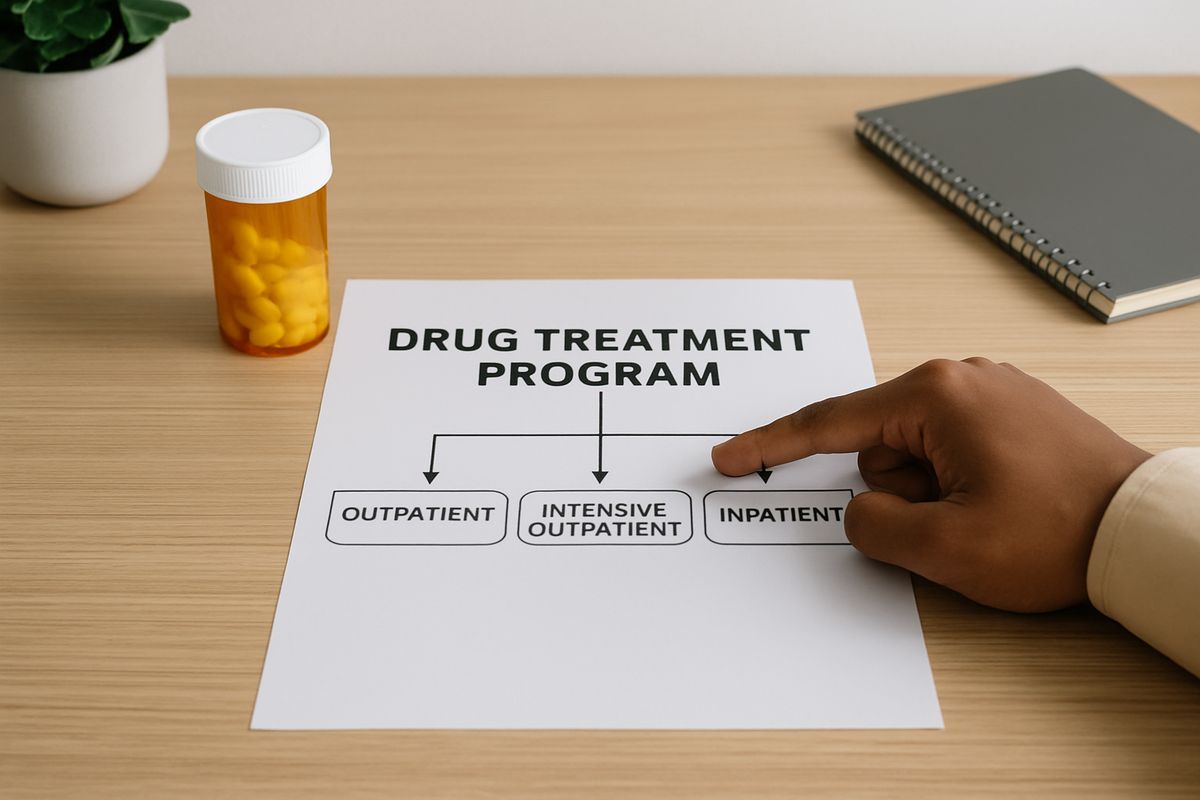
Searching for a drug treatment program gets confusing fast because the same phrase can describe everything from a few therapy sessions each week to full medical detox with 24/7 monitoring. The level of care matters more than the label, and choosing the right one can make treatment safer, faster, and far more likely to stick.
Why level of care matters more than the program name
A “drug treatment program” is not one thing. It is a spectrum of care options that range from outpatient counseling to medically managed detox and residential treatment. What fits best depends on withdrawal risk, how severe the substance use has become, what is happening at home, and whether mental health or medical issues are also in the picture.
That is why strong programs do not start by selling amenities or promising a one-size-fits-all plan. They start with assessment. The goal is to match the person to the safest, most effective intensity of care now, then adjust if needed later.
Speed matters, too. Only about 15% of people needing substance use disorder treatment actually receive it. Delays often lead to more use, more risk, and more failed attempts to quit alone. Good news, though: once you know what level of care to look for, the search becomes much more manageable.
The five questions that usually decide the best fit
Most quality centers use a structured clinical assessment, often based on the ASAM Criteria, the most widely used standard for placement and transfer decisions in addiction care. That framework looks at more than substance use alone. It asks what the person needs to stay safe, engage in treatment, and keep going after discharge.
How risky is withdrawal right now?
Withdrawal is not just uncomfortable. In some cases, it can be medically dangerous. Alcohol and benzodiazepine withdrawal can become life-threatening without proper monitoring. Opioid withdrawal is usually less medically dangerous, but it can be intense enough to drive immediate relapse. Heavy polysubstance use raises the stakes further.
This is a safety issue, not a motivation issue. If someone has a history of severe withdrawal, seizures, hallucinations, daily heavy use, or cannot make it through even a short period without using, detox may need to come first. For a closer look at what that first phase involves, it helps to understand what happens before rehab begins.
How severe is the substance use, and how hard is it to stop?
Pattern matters. Daily or near-daily use, repeated failed quit attempts, strong cravings, binge cycles, overdose history, or relapse soon after prior treatment usually point to a need for more structure. So does losing control quickly after “just one more time.”
If someone has already tried outpatient therapy and kept returning to use between sessions, that is useful information. It does not mean treatment failed. It usually means the level of care was too low for the current reality.
Is home stable enough for recovery?
Some people can recover while living at home. Some simply cannot. If there is easy access to substances, conflict in the household, no reliable support, or a partner or roommate who still uses, outpatient care can become an uphill battle.
A stable home environment means more than having an address. It means having a place where the person can sleep, show up for treatment, avoid daily triggers, and be accountable. If that is missing, a higher level of structure often makes sense.
Are mental health, trauma, or medical issues part of the picture?
They often are. Anxiety, depression, trauma, chronic pain, sleep problems, and burnout can all fuel substance use and complicate recovery. If these issues are active, untreated, or severe, the program should be able to treat them alongside addiction, not treat them as a side issue.
That integrated approach is not a luxury. It is often the difference between temporary abstinence and actual stabilization.
What support will be there after discharge?
Recovery rarely works as a single episode. People do better when treatment includes a step-down plan, ongoing therapy, medication management when appropriate, family involvement, alumni support, or sober living if needed. ASAM’s model also emphasizes reassessment over time, not just a one-time placement decision.
Here is the simple version: the best program is the one that fits now and has a plan for what comes next.

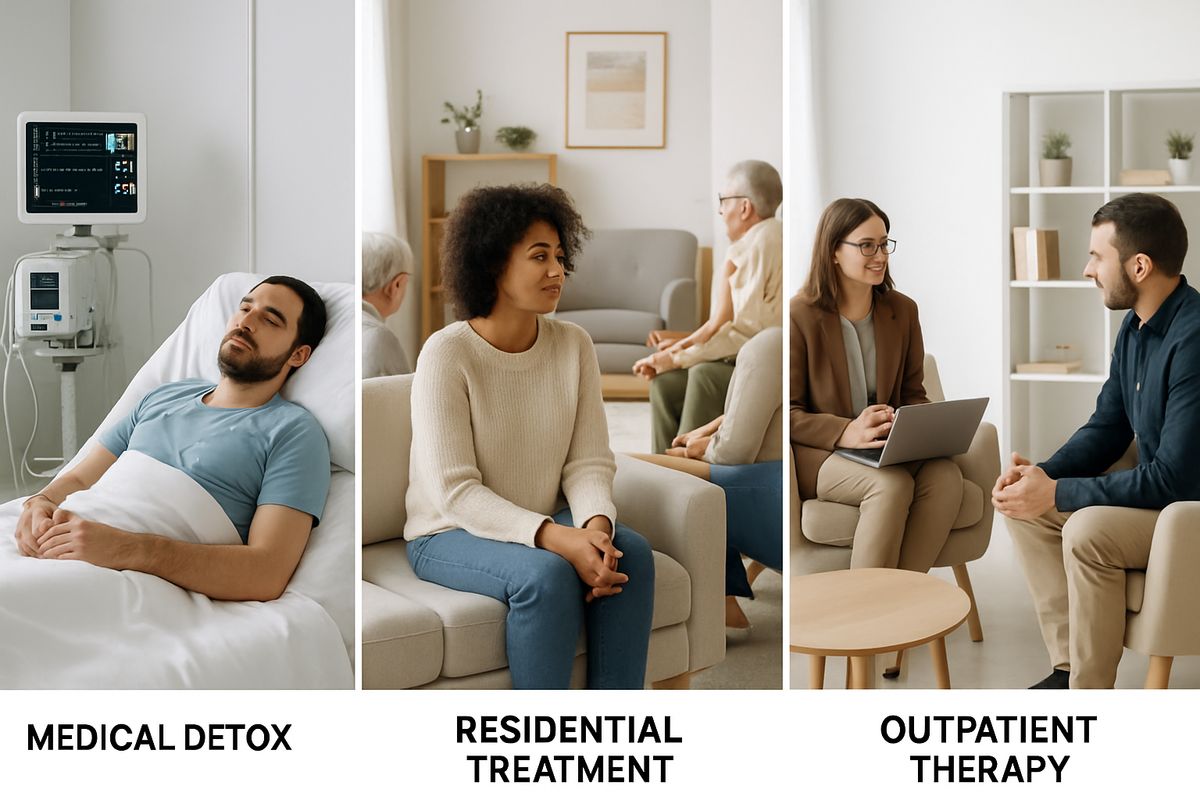
What each drug treatment program level actually looks like
The names can blur together, so it helps to picture daily life in each setting.
Medical detox
Medical detox is short-term stabilization for withdrawal. It is not full rehab, and it is not meant to do all the deeper work of recovery. The purpose is to help the body clear substances safely, manage symptoms, and prepare for the next level of care.
Lower-end estimates put medical detox programs at about $1,750 to start, though actual costs vary by substance, length of stay, and medical complexity. For many people, detox is the doorway into treatment, not the destination. If you are comparing options, it helps to know when both phases are needed together.
Inpatient and residential treatment
Inpatient and residential care both involve living on-site, but they are not always identical. Inpatient treatment usually has more medical intensity and closer monitoring. Residential treatment is still structured and immersive, but often feels a bit less hospital-like.
These levels fit people with unsafe home environments, repeated relapse, strong cravings, co-occurring mental health needs, or a need for daily clinical support. They also make sense after failed lower-intensity care. In many cases, inpatient rehab lasts 28 to 30 days and costs $5,000 to $20,000 for a 30-day stay, while residential treatment can range from $5,000 to $80,000 depending on program type and length. That is a wide spread, and it is one reason families need to look past the headline price.
Partial hospitalization program (PHP)
PHP is full-day treatment without overnight stay. Think of it as a middle ground: a high level of structure during the day, with evenings spent at home or in sober housing. It is often used as a step down from inpatient or as a step up from outpatient when someone needs more support but not 24/7 supervision.
Typical pricing lands around $350 to $450 per day. PHP can work well for someone who is medically stable, highly motivated, and able to stay safe outside program hours.
Intensive outpatient program (IOP)
IOP provides several treatment sessions per week, often spread across days or evenings. It allows more flexibility for work, school, or family responsibilities, which is one reason many people look at it first. In cost research, intensive outpatient averages about $3,582 per episode, or roughly $4,939 when adjusted, and a typical course often lasts around 12 weeks.
It works best when the person has stable housing, reliable transportation, and enough support to remain sober between sessions. If those pieces are missing, IOP can be too light. Families comparing this option with lower-intensity care often benefit from understanding how treatment settings differ in real life.
Standard outpatient and medication-assisted treatment
Standard outpatient is the least intensive level. It usually includes weekly or periodic therapy, relapse-prevention work, check-ins, and sometimes psychiatric follow-up. It is often the most accessible and cost-effective option, which helps explain why outpatient treatment is expected to hold the largest market share because it is more cost-effective and more likely to be covered by insurance.
Medication-assisted treatment also belongs in this conversation. For opioid use disorder, and in some alcohol-related cases, medication plus counseling is one of the strongest evidence-based approaches. Opioid agonist maintenance therapy should be an integral part of comprehensive substance abuse care. But outpatient can be too light for someone with unstable housing, high relapse risk, or dangerous withdrawal.
How to tell when outpatient is enough, and when it probably is not
This is the decision point many families need most.
Signs outpatient may be a good fit
Outpatient care can be a smart fit when symptoms are mild to moderate, withdrawal is not medically dangerous, housing is stable, transportation is reliable, and the person can attend sessions consistently. It also helps when family support is strong and there is no recent pattern of immediate relapse after treatment.
If the person is still functioning at work or school, can stay abstinent between appointments, and does not need round-the-clock monitoring, outpatient may be enough.
Signs a higher level of care may be safer
A higher level of care is usually the better call when there is relapse after prior outpatient treatment, an active mental health crisis, overdose history, unstable housing, daily exposure to triggers, or an inability to stop using between sessions. The same goes for people who need detox, cannot follow through reliably, or are trying to recover in a home environment that keeps pulling them back.
Honestly, many people know this already. They just hope they can avoid a more intensive setting. That instinct is understandable, but it can cost time and increase risk.
What treatment centers rarely explain about cost, insurance, and value
Treatment pricing is rarely simple, and the cheapest quote is not always the best value. If the level of care is too low, the person may relapse quickly, need readmission, or lose more time to crisis.
Typical price ranges by setting
The big-picture number often surprises people. The average cost of drug rehabilitation per person is $13,475. Outpatient is usually less expensive, with many 3-month outpatient programs costing about $5,000 total. Inpatient lower-end estimates start around $6,000 per month, while residential and therapeutic communities can run much higher depending on duration and services.
Length matters, too. Longer treatment plans often affect pricing, and some centers charge admission fees of about $3,000 to $4,000. So when you compare programs, compare the full episode of care, not just the first bill.
How PPO insurance usually changes the decision
Private PPO insurance can offset detox, inpatient, PHP, IOP, and outpatient costs, but coverage depends on medical necessity, deductibles, network status, and authorization rules. The most useful question is not “Do you take my insurance?” It is “What level of care is likely to be covered, and what will I actually owe?”
That distinction matters. Some centers advertise insurance acceptance but leave families to discover later that major services were out-of-network or only partially authorized. Before committing, review how private PPO benefits usually affect rehab costs and approvals.
Questions to ask before you trust a quote
Before you rely on any price, ask what level of care is being recommended and why. Ask what is included in the rate, how many therapy hours are provided each week, whether psychiatric care is included, and which costs are separate.
Also ask what happens if the person needs to step up in care, stay longer, or transition into another level. A polished admissions call means very little if the answers are vague.
Features that separate a strong program from a weak one
Level of care is only half the decision. Quality still varies a lot.
Integrated mental health care
A strong program treats substance use and mental health together. If someone is using to cope with panic, trauma, depression, or chronic stress, treating addiction alone often leaves the real engine of relapse untouched.
This is especially relevant because 29% of outpatient patients in one U.S. study had unmet needs, including housing, employment, and mental or emotional support. Good care looks at the full picture.
Medication plus therapy, when appropriate
Medication should not be dismissed as a shortcut. For opioid use disorder especially, it is part of evidence-based care. The better question is whether medication is being used thoughtfully, alongside counseling, behavioral therapies, and ongoing monitoring.
Family support, case management, and life support services
Treatment is stronger when it helps with real-world stability. Family therapy, relapse planning, case management, work support, housing guidance, legal coordination, and peer recovery support all matter. Research on outcomes points in the same direction: common markers of progress include reduced substance use, better physical and mental health, stable housing and employment, and healthier family connection.
Privacy, professionalism, and continuity
For professionals, students, and families who want discretion, privacy matters. Admissions should be confidential. Staff should be respectful and organized. Scheduling should feel purposeful, not chaotic. And there should be a clear transition plan after primary treatment, especially for anyone entering a live-in program with a structured daily routine.
Common mistakes people make when choosing a drug treatment program
A few mistakes show up again and again, especially when people are searching under pressure.
Picking the least intensive option to save money
It is tempting to start with the cheapest setting and hope it works. But if detox, residential care, or PHP is clinically indicated, starting too low can backfire. Relapse, medical complications, and repeat admissions usually cost more than choosing the right level up front.
Focusing on comfort before clinical fit
Private rooms, better food, and a quiet environment can absolutely help someone stay engaged. But comfort should never outrank clinical staffing, medical capability, psychiatric support, and treatment structure. A beautiful facility is not automatically a strong one.
Ignoring aftercare and relapse planning
Some programs sell the first 30 days as if that is the whole solution. It is not. Addiction treatment outcomes are not standardized across the field, so families have to dig deeper and ask what happens after discharge. The first admission matters. The follow-through matters just as much.
A simple next-step checklist for choosing the right program fast
If you need to move quickly, keep the process simple. Gather insurance details, list the substances involved, note any withdrawal history, write down current mental health concerns, and be honest about whether home is actually safe for recovery.
Then ask each center for a clinical assessment, not just a sales call. Compare the recommended level of care and the reasons behind it. Ask what the first 7 to 30 days will look like, who provides medical and psychiatric support, what family involvement is offered, and what step-down options are planned after primary treatment.
The right drug treatment program is the one that matches the real level of need, not the one with the best slogan. Make the decision based on safety, structure, and continuity, and you will be far more likely to choose care that actually helps.