
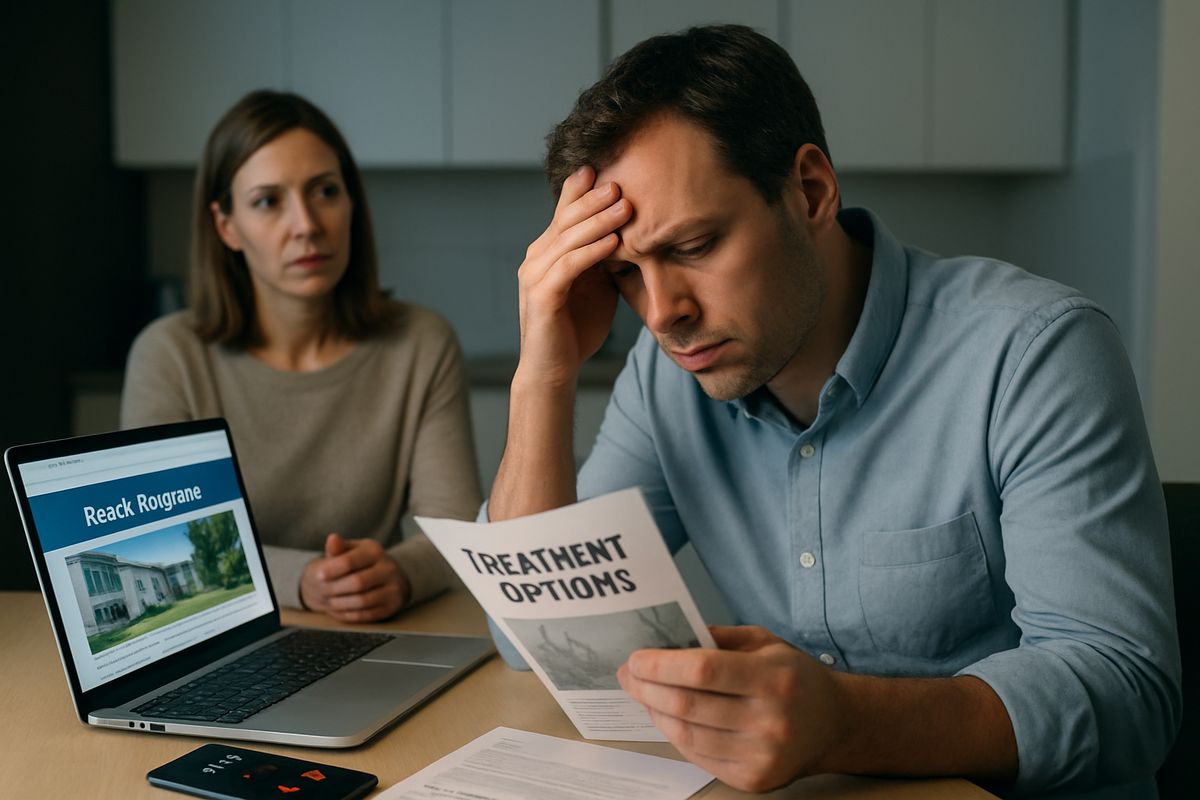
Choosing substance abuse treatment can feel strangely confusing at the exact moment life feels most urgent. The terms sound similar, the promises blur together, and yet the differences between detox, inpatient care, outpatient treatment, and medication support can affect safety, cost, and the odds of staying well afterward.
Why treatment choices feel overwhelming, and why the details matter
Part of the confusion comes from sheer scale. SAMHSA reported that only 19.3% of the 52.8 million people aged 12 or older who needed substance use treatment in 2024 actually received it. That gap leaves a lot of people searching fast, often during a crisis, while trying to make a high-stakes decision with incomplete information.
The names of programs do not tell you enough on their own. “Detox” might mean a medically monitored unit, or it might mean very limited withdrawal support. “Residential” and “inpatient” are often used interchangeably, though the structure and medical oversight can differ. “Accepts insurance” can still leave you with meaningful out-of-pocket costs.
Here’s the key idea: treatment options may sound interchangeable, but they are not. They serve different levels of risk, different timelines, and different recovery needs. If you understand what each level of care really means, you can stop comparing marketing language and start comparing what actually matters.
What “substance abuse treatment” actually includes
Substance abuse treatment is not one thing. It is a continuum of care, meaning a sequence of services matched to what your body, mind, and life situation need right now. For one person, that may begin with medical detox, then move into residential treatment, then outpatient therapy and medication follow-up. For another, it may start in an outpatient setting with counseling and close monitoring.
Good treatment usually combines several forms of care. That can include withdrawal management, individual therapy, group therapy, medication, psychiatric care, family involvement, relapse planning, and support after discharge. The point is not to check boxes. The point is to treat the addiction and the reasons it keeps taking hold.
Research increasingly treats substance use disorders as long-term health conditions, not brief failures of willpower. In fact, rising addiction rates are driving higher demand for both inpatient and outpatient services, with substance use disorders increasingly treated as complex health conditions requiring long-term, multidimensional care. That shift matters because it better matches real life.
Treatment is not just about stopping for a few days
Stopping use and getting stable is only the opening phase. Detox can help clear substances from your system and manage withdrawal, but it does not rebuild coping skills, address trauma, repair sleep, treat depression, or prepare you for triggers waiting at home.
That matters because relapse is common, especially when treatment is too short or too narrow. Research summarized in a major review found relapse rates can sit around 40% to 60% in the first year after treatment, and many people need repeated care episodes over time. That sounds discouraging, but honestly, it should do the opposite. It means relapse is not proof that treatment “failed.” It usually means the care plan was too brief, too disconnected, or not matched well enough to the person.
Recovery plans should match the person, not the label
Two people can both say, “I need rehab,” and need completely different care. Alcohol withdrawal may carry seizure risk. Opioid use may call for medication support to reduce cravings and overdose risk. Stimulant problems often involve intense crashes, depression, sleep disruption, and relapse triggers that need a different clinical approach. Prescription drug misuse can be its own category, especially when benzodiazepines or pain medications are involved.
Severity matters, but so do context and safety. A person with a supportive home, no dangerous withdrawal history, and strong motivation may do well in outpatient care. Someone with repeated relapse, trauma symptoms, unstable housing, or polysubstance use may need a far more structured setting from day one. If you are trying to sort out those differences, it helps to understand how levels of care are usually matched to severity and stability.

When detox is necessary, and what it does not do
Detox means withdrawal management. In plain language, it is the phase where a treatment team helps your body adjust safely after you stop or reduce alcohol or drugs. Depending on the substance and your history, that may involve medication, vital sign monitoring, hydration, rest, and medical supervision.
Detox is especially important when withdrawal can become medically dangerous, deeply destabilizing, or hard to tolerate without immediate support. That often includes alcohol, benzodiazepines, opioids, or long-term heavy use of multiple substances. With alcohol and benzodiazepines, the safety issue is especially serious because withdrawal can involve seizures, delirium, or life-threatening complications.
A lot of people try to push through this alone because they want to avoid the label of rehab. But withdrawal is not a character test. It is a medical event for many people.
Signs you may need medical detox before rehab
Medical detox deserves strong consideration if you have ever had severe withdrawal symptoms, seizures, hallucinations, or delirium after stopping. It also makes sense if you use multiple substances at once, have been using heavily for a long time, cannot get through even a short period without feeling physically unwell, or have tried quitting on your own and relapsed quickly just to stop the symptoms.
Other warning signs are less dramatic but still serious. Repeated vomiting, shaking, panic, extreme agitation, blood pressure changes, or intense opioid withdrawal can all derail early recovery and send people back to using. If there has been an overdose, an ER visit, or blackouts tied to use, the threshold for seeking a higher level of medical support should be low.
For a closer look at what this phase usually involves, including monitoring and timelines, it helps to review what safe withdrawal care should look like before rehab begins.
Detox helps you get stable, but it is not the whole treatment plan
Detox is stabilization, not recovery. It gets you through the first acute hurdle, but it does not do much to change the patterns that led to use in the first place. That is why detox-only care often has poor long-term results when it is not followed by therapy, medication, and structured follow-up.
This is one of the biggest misunderstandings in treatment shopping. Families often feel relieved once a loved one agrees to detox, and that relief makes sense. But if the plan ends there, the deeper problem is usually still intact. The better question is not “Do they offer detox?” It is “What happens immediately after detox?”
Inpatient rehab, residential care, and partial hospitalization, what is the difference?
These options sit at different points on the intensity scale. All of them can be legitimate, but they are not interchangeable. The differences usually come down to supervision, medical access, daily structure, living arrangements, and how protected you are from triggers while treatment starts doing its work.
For high-risk situations, more structure usually beats more freedom. Early recovery is fragile. Privacy matters, comfort matters, but the core issue is how much support is in place between you and the next relapse.
Inpatient and residential treatment
Inpatient and residential treatment both refer to live-in care. You stay on-site, follow a full daily schedule, and receive therapy, recovery planning, and support in a controlled setting. Some programs also offer more direct medical oversight, especially when detox and residential treatment are connected under one roof.
This level of care tends to fit people with severe addiction, repeated relapse, unsafe home environments, major mental health symptoms, or a real need to step away from work, social pressure, and access to substances. The main advantage is containment. You are not trying to recover in the same environment that kept the problem going.
Length of stay varies, but 30 days is often just a starting point, not a magic number. Some people need longer, especially when progress has been interrupted by prior short stays. If you are comparing programs, look closely at what on-site treatment actually offers beyond a place to sleep.
Partial hospitalization programs (PHP)
PHP is a middle ground. It usually provides full-day treatment, several days a week, without overnight stays in many cases. You get substantial clinical support, but not 24/7 supervision.
This option can work well for someone who needs more than outpatient therapy but does not require round-the-clock monitoring. It is often a step-down level after detox or residential care, though some people enter PHP directly if withdrawal risk is low and home life is stable enough.
The catch is that PHP still asks a lot of your environment. If you return each night to conflict, access to substances, or isolation, the intensity of daytime care may not be enough.
Intensive outpatient programs (IOP) and standard outpatient care
IOP usually means treatment several times a week for a few hours at a time. Standard outpatient care is lighter, often one or two sessions weekly, sometimes paired with medication management or support groups. These levels offer more flexibility for work, school, parenting, and privacy.
That flexibility is a real benefit. For someone with mild to moderate symptoms, a stable home, strong motivation, and no dangerous withdrawal risk, outpatient care can be a smart place to start or continue. It also plays an important role after higher levels of care.
But outpatient can be too little support when cravings are intense, relapse has been frequent, or home is chaotic. If the person cannot stay sober between sessions, the plan probably needs more structure.

Medication-assisted treatment and addiction medications, what they really mean
Medication in addiction care is often misunderstood, and that misunderstanding costs lives. Evidence-based medication is not “taking the easy way out,” and it is not simply replacing one addiction with another. In many cases, it is one of the strongest tools available for reducing cravings, lowering overdose risk, and helping people stay in treatment long enough for the rest of recovery work to take hold.
Even so, medication remains surprisingly underused. SAMHSA found that only 17.0% of people with past-year opioid use disorder in 2024 received medications for opioid use disorder. For alcohol, the gap is even wider: just 2.5% of people with alcohol use disorder received medications for alcohol use disorder. Those numbers are not small glitches. They reflect a major treatment literacy problem.
Medications for opioid use disorder
The most common medications for opioid use disorder are buprenorphine, methadone, and naltrexone. They work differently, but the big-picture goal is the same: reduce cravings, reduce withdrawal, stabilize functioning, and cut the risk of fatal overdose.
Buprenorphine and methadone can help people feel normal enough to work, sleep, think clearly, and engage in therapy instead of spending each day cycling through craving and withdrawal. Naltrexone blocks opioid effects and may fit certain patients after detox, though it requires full opioid abstinence before starting.
A good program does not treat medication like a side issue. It assesses whether it fits, explains the trade-offs clearly, and monitors the person closely over time.
Medications for alcohol use disorder
For alcohol use disorder, common options include naltrexone, acamprosate, and disulfiram. Naltrexone can reduce the rewarding effect of drinking and help with cravings. Acamprosate may support abstinence after someone stops drinking. Disulfiram creates an unpleasant reaction if alcohol is consumed, so it works best when someone is highly motivated and has strong accountability.
These medications do not erase the need for therapy. They lower friction. That can be enough to help someone finally engage consistently instead of white-knuckling every urge alone.
When medication should be combined with therapy and monitoring
Medication works best when it is part of a broader plan. That usually means counseling, relapse prevention, regular follow-up, mental health care, and clear communication between prescribers and therapists. Programs that skip this coordination often leave people with half a solution.
The better model is personalized and integrated. If a center talks about medication vaguely, or avoids discussing it at all, treat that as a meaningful signal.

Therapy, dual-diagnosis care, and why mental health treatment often changes the outcome
A lot of people seeking treatment are not dealing with addiction alone. Anxiety, depression, trauma, burnout, panic, grief, sleep problems, and mood instability often sit right beside the substance use. Sometimes they came first. Sometimes they grew because of the substance use. Either way, ignoring them usually backfires.
This is why dual-diagnosis care matters so much. A program can be polished, private, and well marketed, yet still fail people if it treats the drug or alcohol problem in isolation. Technology adoption and integrated, data-driven care models are increasingly seen as important for improving access and effectiveness, especially for people facing stigma or barriers to specialists, but technology alone is not the answer. The real issue is whether mental health care is built into the treatment plan from the start.
What dual diagnosis means in plain English
Dual diagnosis means a person has both a substance use disorder and a mental health condition at the same time. You may also hear “co-occurring disorders.” The wording sounds clinical, but the idea is simple: both issues affect each other, so both need treatment.
If panic, trauma, depression, or ADHD symptoms keep driving the urge to use, relapse risk stays high. If someone gets sober briefly but feels emotionally unbearable, dropping out of care becomes more likely. Integrated treatment addresses that loop directly.
Therapies you are likely to see, and what they help with
CBT, or cognitive behavioral therapy, helps people catch the thoughts, habits, and trigger patterns that feed use. It is practical, which is why it shows up in many programs. DBT, or dialectical behavior therapy, helps more with emotional regulation, distress tolerance, and relationship conflict, especially when feelings escalate fast.
Motivational interviewing helps people work through ambivalence. That matters more than many families realize, because not everyone enters treatment feeling fully ready. Trauma-informed therapy helps people process painful experiences without turning treatment into a pressure cooker. Group therapy reduces isolation and lets people practice honesty in real time. Family therapy can uncover enabling patterns, rebuild trust, and create better support after discharge.
None of these approaches is magic on its own. Together, they give people more ways to respond when stress hits.
How to choose the right level of care for your situation
The right level of care is the one that matches your current risk, not the one that sounds easiest to fit into your schedule. That can be a hard truth, especially for professionals or parents trying to hold everything together. But choosing too little care often drags the process out and raises the overall cost, emotionally and financially.
Start with seven factors: severity of use, withdrawal risk, relapse history, home stability, mental health symptoms, work and privacy needs, and willingness to travel for better care. If several of those point toward instability, higher structure is usually the safer bet.
Travel can actually help in some cases. Distance adds privacy, reduces easy access to familiar triggers, and makes it harder to leave impulsively in the first week. That is not always necessary, but it can be a smart move when the local environment has become part of the problem.
Questions to ask yourself or a loved one before calling a center
A few direct questions can clarify a lot. Does use feel uncontrollable once it starts? Does stopping bring shaking, sweating, vomiting, panic, or other withdrawal symptoms? Have there been overdoses, blackouts, ER visits, legal problems, or work consequences? Has the person tried to quit repeatedly and been unable to stay sober? Is the home environment supportive, or does it make relapse more likely?
Also ask about function. Can the person reliably care for themselves right now? Are they hiding use, isolating, or becoming emotionally unpredictable? Are anxiety, depression, or trauma symptoms clearly part of the picture?
The more “yes” answers you get to the high-risk questions, the more seriously you should consider detox and residential or inpatient care.
Red flags that mean you should seek a higher level of care now
Some situations should move the decision out of the “maybe” category. Overdose history, suicidal thinking, severe alcohol or benzodiazepine withdrawal risk, polysubstance use, unstable housing, escalating legal danger, and inability to remain sober even briefly between quit attempts all point toward more immediate, more structured treatment.
This is also true when the person keeps agreeing to outpatient care and then using before the first real stretch of stability begins. At that point, the issue is usually not motivation alone. It is that the environment has too much pull and the treatment intensity is too low.
Paying for treatment with private insurance, and what “covered” usually means
Private insurance can make quality treatment much more accessible, but “covered” is one of the most misunderstood words in admissions. A PPO plan may cover detox, residential, PHP, IOP, physician visits, therapy, or medication management, yet still leave deductibles, coinsurance, or out-of-network balances.
This is where buyers need to slow down. “We accept insurance” does not mean “your plan will pay most of this.” It means the facility is willing to verify benefits and bill insurance in some way. Those are very different statements.
PPO plans often offer more flexibility than HMO-style plans, including out-of-network benefits. That can matter if you are traveling for treatment or prioritizing privacy over staying local. If you want a clearer view of the moving parts, it helps to understand how private PPO rehab benefits are usually broken down before admission.
What to verify before you commit to a facility
Before you commit, verify the exact level of care being recommended and whether your plan covers that level. Ask about preauthorization, in-network versus out-of-network status, deductibles, coinsurance, physician fees, medication costs, lab work, and what happens if the recommended stay is extended.
You also want an estimate of patient responsibility in writing, even if it is still a range. No serious treatment decision should rely on vague verbal reassurance from a sales-focused admissions call.
Travel, privacy, and premium amenities versus clinical quality
Privacy and discretion matter, especially for professionals, executives, public-facing clients, and families trying to protect dignity during a hard moment. Comfortable surroundings can also help people stay engaged. Good food, clean rooms, quiet space, and a calm setting are not meaningless luxuries.
But they are not treatment outcomes. A beautiful campus does not make up for weak clinical staffing, limited psychiatric support, or vague discharge planning. Comfort should support care, not distract from evaluating it.
What a strong treatment center should offer, and what to question
Once you understand levels of care, the next step is evaluating facilities on substance rather than presentation. This is where many buyers get pulled off track by glossy websites, soft promises, and urgency-heavy admissions scripts.
A strong center should be able to explain exactly how it assesses patients, what clinical services are available on-site, how it handles detox and mental health needs, which professionals are involved, and what happens after discharge. If a facility cannot answer those clearly, keep looking.
Signs of quality care
Look for licensed clinicians, medical oversight where appropriate, individualized treatment planning, dual-diagnosis capability, access to addiction medications, family involvement when helpful, and a concrete discharge plan. Those are not extras. They are signs the program is built around care, not just occupancy.
It also helps when a center can speak intelligently about outcomes, even though there is currently no standardized system for measuring addiction treatment outcomes across the field. The best programs still track progress, review what is working, and adjust care rather than pretending every patient follows the same script.
Warning signs and common sales tactics to avoid
Be cautious if a center promises guaranteed success, pushes for immediate enrollment without a proper assessment, avoids discussing medication options, gives unclear pricing, or talks far more about amenities than therapy, staffing, and discharge planning.
Another red flag is a plan with no meaningful aftercare. If the answer to “What happens next?” is vague, the program may be overfocused on the first stay and underprepared for what recovery really takes. When comparing options, a more grounded guide to judging treatment programs beyond marketing claims can help you spot the difference.
Why aftercare matters more than most people expect
The first program is not the whole recovery story. In many cases, it is the stabilization and skill-building phase that makes longer recovery possible. What happens after discharge often matters just as much as what happens during the initial stay.
That is not just opinion. In a major review, planned treatment or support lasting 18 months or more was linked to a 23.9% greater chance of abstaining or drinking or using moderately compared with shorter standard treatment. Good news, this is easier to act on than it sounds. You do not need 18 straight months in residential care. You need a step-down plan that keeps support active over time.
Step-down care, sober living, recovery coaching, and alumni support
Aftercare can include PHP, IOP, individual therapy, medication follow-up, peer support, sober living, recovery coaching, alumni check-ins, and regular monitoring. Different people need different combinations, but the principle is simple: do not create a cliff at discharge.
Recovery housing can help in particular when home is not yet stable. SAMHSA reports that recovery housing has been shown to decrease substance use, lower relapse risk, reduce incarceration rates, increase income and employment, and improve family relationships. That is a meaningful reminder that recovery is about life stability, not just stopping use.
Longer support often improves outcomes
The strongest programs think in phases. Detox, primary treatment, step-down care, and continued support all connect. That design better reflects what addiction actually is: often chronic, often relapsing, and often responsive to consistent care rather than one dramatic intervention.
So when you compare centers, do not ask only how fast they can admit you. Ask how they plan to keep progress going after the first discharge date. That answer tells you a lot about whether the program is built for real recovery or short-term turnover.
Finding the best fit for immediate placement
If you need treatment now, the goal is not to become an expert on every rehab model in a day. The goal is to narrow the field quickly and intelligently. You are looking for safety, fit, insurance clarity, and a plan that extends beyond the first week.
The market for treatment is growing, with global substance abuse treatment spending projected to rise from USD 15.72 billion in 2025 to USD 39.49 billion by 2035, but growth does not guarantee quality. Access gaps, staffing shortages, and uneven clinical standards are still real. That is why a focused checklist matters.
A simple shortlist for comparing programs today
Start by confirming whether detox is needed, and whether it is available on-site with medical supervision. Then match the program level to the actual risk level, not just convenience. Verify that the center can treat co-occurring mental health issues, explain whether medication is available and appropriate, review PPO benefits in detail, and ask for the aftercare plan before admission, not after.
If a center can clearly answer those questions, you are likely dealing with a more clinically grounded program. If the answers stay vague, polished, or evasive, move on.
If the situation feels urgent
If there is overdose risk, severe withdrawal, suicidal thinking, hallucinations, chest pain, seizures, or inability to stay safe, urgent action matters more than perfect research. Call 988 for a behavioral health crisis, seek emergency medical care for overdose or dangerous withdrawal, or use SAMHSA’s FindTreatment.gov and 800-662-HELP for treatment referrals.
The right program is the one that matches the reality in front of you. Choose safety first, choose evidence over marketing, and choose care that continues after the first door closes.
References
- samhsa.gov
- finance.yahoo.com
- naatp.org
- sciencedirect.com
- library.samhsa.gov